Showing posts with label New Pension Scheme. Show all posts

Saturday, 16 January 2021

Submission of Life Certificate by National Pension system – Additional Relief (NPS-AR) pensioner through Jeevan Pramaan: Guidelines by CPAO

Submission of Life Certificate by National Pension system – Additional Relief (NPS-AR) pensioner through Jeevan Pramaan: Guidelines by CPAO

CPAO

GOVERNMENT OF INDIA
MINISTRY OF FINANCE
DEPARTMENT OF EXPENDITURE
CENTRAL PENSION ACCOUNTING OFFICE
TRIKOOT, BHIKAJI CAMA PLACE,
NEW DELHI 110066

CPAO/ Data Bank/ Life Certificate/ OM/2020‐ 21/360

dated: 11.01.2021

Office Memorandum

Subject : Submission of Life Certificate by NPS-AR pensioner through Jeevan Pramaan.

The Central Pension Accounting Office is Pension Disbursing Authority for National Pension system- Additional Relief (NPSAR). The NPS-AR pensioners are required to submit Life Certificate in the month of November every year for continuation of the pension. Life Certificates are sent to CPAO through the Bank Branches of the pensioners, where the pensioners maintain their pension accounts.

2. A new interface (Aadhar based) for submission of Life Certificate has been developed in Jeevan Pramaan for NPS-AR pensioners and this interface is now live for submission of Digital Life Certificate (DLC] through Jeevan Pramaan. Now NPS-AR pensioners can submit their Life Certificate through Jeevan Pramaan. The Jeevan Pramaan User Manual for uploading Digital Life Certificate is attaching herewith.

Huge relief to CAPF personnel to extend Disability Compensation – Employees covered under NPS will get benefits under Rule 9 of Extra Ordinary Pension (EOP)

Huge relief to CAPF personnel to extend Disability Compensation – Employees covered under NPS will get benefits under Rule 9 of Extra Ordinary Pension (EOP)

This issue with the approval of Chief Controller (Pension).

(Satish Kumar Garg)
Sr. Accounts Officer, CPAO

Download Life Certificate User Manual – Jeevan Pramaan – CPAO

NPS AR pensioner Jeevan Pramaan submission of life certificate
NPS AR pensioner Jeevan Pramaan

Monday, 9 March 2020

NPS to OPS – Old pension scheme for 2004 employees

Latest news on NPS to OPS

NPS to OPS – Old pension scheme for 2004 employees

Withdrawal of NPS and reintroduction of Old Pension Scheme under CCS (Pension) Rules, 1972 to the Central Government Employees recruited on or after 01.01.2004.
 
Demand: In a nutshell all those employees irrespective of their date of recruitment / selection who were recruited against the available vacancies as on 31.12.2003 should all be brought under the Old Pension Scheme under CCS (Pension) Rules, 1972.

Latest Central Government Employees News

Shiva Gopal Mishra
Secretary

National Council (Staff Side)
Joint Consultative Machinery
for Central Government Employees
13-C, Ferozshah Road, New Delhi - 110001
NC-JCM-2020/CS/PM/NPS
March 2, 2020

The Cabinet Secretary
&
Chairman
National Council (JCM)
Cabinet Secretariat, Rashtrapati Bhawan,
New Delhi

Subject: Withdrawal of NPS and reintroduction of Old Pension Scheme under CCS (Pension) Rules, 1972 to the Central Government Employees recruited on or after 01.01.2004.

Reference: Department of Pension and Pensioners Welfare OM No. 57/04/2019-P& PW(B) dated 17th February, 2020.

Dear Sir,

Your kind and immediate attention is drawn to the above mentioned subject. You are aware that the entire Central Government Employees are opposing the National Pension System (NPS) imposed arbitrarily by the Government on the Central Government Employees who are recruited on or after 01st January, 2004. The Staff Side of the National Council (JCM) is repeatedly representing to the Government to withdraw the NPS and reintroduce the Old Pension Scheme under CCS (Pension) Rules, 1972 to the Central Government Employees recruited on or after 01.01.2004.

Also check: Steps to complete the pension case as prescribed in in CCS Pension Rules, 1972

This issue was discussed as an Agenda Item (2. Item No. 02/05/NC-44) in the 44th Ordinary Meeting of National Council (JCM) held on 28th May, 2005 under the Chairmanship of Cabinet Secretary. In this meeting the Staff Side have specifically stated that “they would not accept the new Scheme and prefer to disagree.” The Official Side reiterated that the new Scheme was a Defined Contribution Scheme which is fundamentally different from a Defined benefit Scheme. Financial compulsions have necessitated to shift to the New Scheme.

The Official Side, however, stated that the views and concerns of the Staff Side have been noted.
Staff Side requested that action taken on the views noted may be reported and further discussed.
The issue was again discussed in the 45th Meeting of the National Council (JCM) held on 14th October, 2006, as Agenda Item (Item No. 03/06/NC-45). In this meeting the Staff Side has stated “The new Scheme that has been imposed on the new entrants to Government service (recruited after 01.01.2004) is not acceptable, as the same is subject to the vagaries of the stock market.”
Further again the issue was discussed in the meeting of the Standing Committee of the National Council (JCM) held on 14th November, 2006, the Staff Side once again oppose the NPS and reiterated their demand for withdrawing the NPS.

The Staff Side again raised the issue in the Standing Committee Meeting of the National Council (JCM) held on 14th December, 2007, wherein the Official side gave the following assurance. “For employees who had entered w.e.f. 01.01.2004 are not likely to be worse off vis-a-vis the current Pension system in force, as the replacement rate would match to the present one. Thus, NPS is a win-win situation for employees and the Government.”

However, the above assurance given by the Government has proved to be false since at present the employees who are appointed after 01.01.2004 and governed under the NPS have now started retiring from service and they are getting a very meager Pension of Rs. 2,000/- to 3,500/- per month, whereas the minimum Pension under the Government of India to the Central Government Employees is now Rs. 9,000/- + DR.

Considering the above situation we once again represented the matter before the 7th CPC and based on the 7th CPCs recommendation , Government constituted a Committee on NPS. The Staff Side submitted its detailed Memorandum to the Committee and also appeared in person before the Committee and have reiterated our position that the Central Government Employees as a whole must be fully excluded from the ambit of the Defined Contributory Pension Scheme, since it has taken away the benefit of defined and guaranteed Pension to the Central Government Employees.
The issue was once again raised by the Staff Side in the meeting of the Standing Committee of National Council (JCM) held under the Chairmanship of Secretary / DOP&T. The extract of the Minutes is given below for your ready reference.

“Item No. 7 : Scrap PFRDA Act and re-introduce the Defined Benefit Statutory Pension Scheme :

Staff Side told that they reiterate their stand in that, the NPS should be scraped and the Defined Guaranteed Pension under the CCS (Pension) Rules, 1972 should be ·restored to the employees, who were recruited on or after 01.01.2004. They also demanded that GPF facility may be provided to the NPS governed employees on an optional basis.

Chairman desired that the Department of Pension may consider the demand in reference to GPF of the Staff Side.”

The Staff Side again raised the issue in the presence of the then Cabinet Secretary in the National Council (JCM) Meeting held on 13.04.2009. The relevant portion of the Minutes of the Meeting is given below :-

"4.3 Withdrawal of NPS and re-introduction of Defined pension under CCS (Pension) Rules, 1972 he emphasized the Government to recommend at least 50% of the last pay drawn as minimum Pension to the retired I retiring Central Government Employees."

“5.14 Secretary, Staff Side stated that they were opposed to NPS and demanded that the Old Pension Scheme be restored. He further stated that the Government should guarantee Pension of 50% of the last pay drawn to the employees recruited on nor after 01.01.2004. He further demanded facility of GPF and Family Pension to all employees."
 
From all the above deliberations which have taken place in the National Council (JCM) you will appreciate that how serious the issue is.

In this situation the Department of Pension and PW vide OM No. 57/04/2019-P&PW (B) dated 17th February, 2020 have issued an instructions extending the benefit of the Old Pension Scheme to a particular section of employees. The relevant portion of the DOP&T OM dated 17th February, 2020 is given below for your kind ready reference.

“4. ……………… in all cases where the results for recruitment were declared before 01.01.2004 against vacancies occurring on or before 31.12.2003, the candidates declared successful for recruitment shall be eligible for coverage under CCS (Pension) Rules, 1972. Accordingly, such Government servants who were declared successful for recruitment in the results declared on nor before 31.12.2003 against vacancies occurring before 01.01.2004 and are covered under the National Pension System on joining on or after 01.01.2004, may be given a onetime option to be covered under the CCS (Pension) Rules, 1972.”

Already the Government employees are divided into two classes, one making subscription and another making no subscription but receiving 50% of the last Basic Pay as Guaranteed Pension. Now by the above mentioned DOP&T OM again another class of employees within the NPS Scheme has been introduced. This has resulted in lot of discontentment amongst the Central Government Employees. Therefore, without prejudice to our right to continue to represent to the Government to withdraw the NPS and to reintroduce the Old Pension Scheme under CCS (Pension) Rules, 1972 to all the Central Government Employees especially those who are recruited on or after 01.01.2004, we suggest the following as an immediate redressal of the grievance.

1) All the Central Government Employees who were recruited against the available sanctioned vacancies in different categories during the Year 2003, irrespective of the fact that whether selection process was completed on or before 31.12.2003, or the Notification / Call Letter / Interview / Selection process was completed on any year after 31.12.2003, but vacancies on the particular post were available on 31.12.2003, all such cases should be brought under the coverage of the Old Pension Scheme, since the recruitment process was delayed by the concerned Departments even though vacancies were available on 31.12.2003. In a nutshell all those employees irrespective of their date of recruitment / selection who were recruited against the available vacancies as on 31.12.2003 should all be brought under the Old Pension Scheme under CCS (Pension) Rules, 1972.

As assured in the National Council (JCM) Meeting, GPF Scheme may be introduced to the employees governed under NPS at present.

As demanded by the Staff Side 50% of the last pay drawn should be guaranteed as Pension under the NPS Scheme till the Government withdraws the NPS for Central Government Employees.

Conclusion
We request you to convene a meeting of the Standing Committee of the National Council (JCM) under your Chairmanship to discuss the entire issue and to reach an amicable settlement.

Thanking you,
Yours Sincerely,
Sd/-
(SHIVA GOPAL MISHRA)
Secretary

Thursday, 5 March 2020

Benefit of gratuity in respect of Railway employees covered under NPS

Benefit of gratuity in respect of Railway employees covered under NPS

NPS

GOVERNMENT OF INDIA (BHARAT SARKAR)
MINISTRY OF RAILWAYS (RAIL MANTRALAYA)
(RAILWAY BOARD)

RBE No.29/2020

No. F(E)HI/2005/PN1/35

New Delhi, Dated : 04.o3.2020

The GMs/ Principal Financial Advisors,
All Zonal Railways/ Production Units,
(As per mailing list)

Subject: Counting of service on joining new service in State Government / Central Government / Autonomous Body for the benefit of gratuity in respect of Railway employees covered under National Pension System (NPS).

A copy of Department of Pension & Pensioners’ Welfare (DOP&PW’s) O.M. No. 7/5/2012-P&PW(F)/B dated 12th February, 2020 is enclosed herewith for compliance and guidance. These instructions shall apply mutatis mutandis on the Railways also. Central Civil Services (Pension) Rules, 1972 correspond to the Railway Services (Pension) Rules, 1993.

The Railway Board’s instructions corresponding to the DOP&PW’s instructions referred to in their aforesaid O.M. dated 12th February, 2020 are given under :-


S. No.DOP & PW’s instructions Railway Board’s corresponding instructions.
1.O.M. No. 38/41/06 -P&PW(A) dated 05.05.2009Letter No. 2008/ AC-II/21/19 dated 29.05.2009.
2.O.M. No.7/5/2012 -P&PW(F)/B dated 26.08.2016Letter No. 2012/ F(E)III/1(1)/4 dated 05.09.2016.

(G. Priya Sudarsani)
Director, Finance (Estt.)
Railway Board.

D.A.: as above

No. F(E)III/2005/PN1/35

New Delhi, dated: 04 . 03.2020.

Copy to Deputy Comptroller and Auditor General of India (Railways), Room No. 224, Rail Bhawan, New Delhi.

For Financial Commissioner / Railways


Thursday, 12 September 2019

NPS Booking of expenditure towards Interest on delayed / non- deposit of National Pension System Contributions

NPS

Booking of expenditure towards Interest on delayed / non- deposit of National Pension System (NPS) Contributions
GOVERNMENT OF INDIA
MINISTRY OF RAILWAYS
(RAILWAY BOARD)
RBA No. 78 /2019
No. 2019//\C-l l / 21/6
New Delhi, dated 05.09.2019
  1. General Managers/ FA & CAOs etc (As per standard List 1)
  2. All attached offices/ Subordinates offices (As per standard List II)
Sub: Booking of expenditure towards Interest on delayed/non- deposit of National Pension System (NPS) Contributions.

Advanced Correction Slip No. 144 modifying/ introducing the existing/new detailed head under Sub Major Head 11 (erstwhile D.No. 13/Abstract 0) for booking of Revenue expenditure towards Interest on delayed /non-deposit of NPS Contributions and introduction of new Primary Unit for booking Interest on delayed/non-deposit of NPS contribution in both Revenue and Capital Expenditure i n Indian Railway finance Code Vol. I I (Second Reprint 2008) is enclosed for necessary
Contents of the correction slip may please be circulated suitably. Kindly acknowledge receipt.
DA: As above.
(Sanjeev Sharma)
Director Finance/ Accounts
Railway Board
Advance Correction Slip No. 144
Indian Railway Finance Code Vol. II (Reprint Edition 2008)

I. Please modify /introduce the detailed head under Sub Major Head 11 (erstwhile Demand No. 13/Abstract O) as under:

Minor Head
100 Govt. Contribution for Defined Contribution Pension Scheme

Sub Head
110 Govt Contribution for Defined Contribution Pension Scheme and Interest

Detailed Head
111 Government Contribution for Defined Contribution Pension Scheme.112 Interest on delayed/non-deposit of NPS Contribution

II. Please introduce the following new Primary Unit for booking interest on delayed/ Non-deposit of N PS contributions under Revenue classification.

54 Interest on delayed/non-deposit of NPS contribution
III. Please introduce the following new Primary Unit for booking interest on delayed/ Non-deposit of NPS contributions under Capital classification.

54 Interest on delayed/non-deposit of NPS contribution

Note:

i. Expenditure on interest on delayed/non-deposit of NPS contributions in case of Capital portion (Construction and Production Units) establishment shall be booked to Primary Unit 54 - Interest on delayed/ non-deposit of NPS contributions under expenditure head to which Government Contribution to Defined Pension Scheme is being charged .

ii. Expenditure on interest on delayed/non-deposit of NPS contributions under Major Head 3001 (erstwhile Demand No. 1& 2) will be booked under Primary Unit 54 - Interest on delayed/ non-deposit of NPS contributions.

(Authority : Board's Letter No. 2019/ AC-11/ 21/6 dated 05.09.2019)
railway-board-order-2019-nps


Source: Railway Board

Wednesday, 17 July 2019

Restoration of Old Pension Scheme – Loksabha

Restoration of Old Pension Scheme – Loksabha Q & A

GOVERNMENT OF INDIA
MINISTRY OF FINANCE
DEPARTMENT OF FINANCIAL SERVICES
*****
LOK SABHA
UNSTARRED QUESTION NO:3569
TO BE ANSWERED ON JULY 15.07.2019

Restoration of Old Pension Scheme

Rakesh Singh
Rodmal Nagar

Will the Minister of FINANCE be pleased to state:-

(a) whether the demand is being made by trade unions/Government employees to restore the old pension scheme for the Central Government employees as the pension amount is lower and uncertain under the new pension scheme which was implemented in the year 2004;
(b) if so, whether the Government is considering the aforesaid demand of the employees; and
(c) if so, the details thereof and if not, the reasons therefor?

ANSWER

The Minister of State (Finance)
(Shri Anurag Singh Thakur)


(a) Yes, Sir.

(b) and (c) Due to rising and unsustainable pension bill, the Government had made a conscious move to shift from the defined benefit, pay-as-you-go pension scheme to defined contribution pension scheme now called as National Pension System (NPS). The transition also helped in freeing the limited resources of the Government for more productive and socio-economic sectoral development.

There is no proposal to replace the NPS with old pension scheme in respect of Central Government employees recruited on or after 01.01.2004.

******

Source: Loksabha

Tuesday, 18 June 2019

NPS - Central Government hierarchy of Nodal Offices


NPS - Central Government hierarchy of Nodal Offices

Function of NPS Nodal Offices in Central Government

Nodal Office means the offices which act as interface between the subscribers and the central record keeping agency and shall include the Principal Accounts Office (PrAO), Pay and Accounts Office (PAO) and Drawing & Disbursing Office (DDO) under the Central Government or analogous offices under Central Government.
NPS - Hierarchy of Nodal Offices in Central Govt.

PrAO
PAO
DDO
^
^
Subscriber


Central Government hierarchy of Nodal Offices

Function of NPS Nodal Offices in Central Government Employees

1. Drawing and Disbursing Officer

Functions of DDO:
DDO will collect all the registration forms and forward it CRA for registration of the same. Further, it will also send the change request forms from the Subscribers and forward it to PAO for updation in NPSCAN system. However, DDO shall have various other functions as mentioned below:
Obtain the duly filled Application for allotment of PRAN from the subscribers, fill and certify the employment details.

Consolidate Application for allotment of PRAN and forward it to PAO.

Distribution of PRAN kit, I-Pin, T-Pin to Subscribers.

Forward the Switch requests, New Scheme Preference requests, Change in subscriber details request, Withdrawal Requests received from Subscribers to the PAO.

Providing information to PAO about Subscribers’ pension contribution.

Forward the grievance of the subscriber to the PAO.

DDO shall register itself with CRA before it starts providing various services to the Subscribers. For registering itself in CRA system, DDO shall forward the applications for registration to the concerned PAO.

2. Pay and Accounts Office

Functions of PAO
PAO will be responsible for carrying out the following activities:

Consolidate DDO registration form and forward it to CRA for registration.

Facilitate registration of Subscribers by consolidating the Application for allotment of PRAN received from the concerned DDO and forward it to the CRA - F.C.

Upload Subscriber Contribution File (SCF) to NPSCAN system. SCF will contain subscriber wise details of pension contribution such as PRAN, Pay month and year, Subscriber Contribution amount and Government Contribution amount etc.

PAO will deposit the contribution amount in the Trustee Bank as per the SCF uploaded in NPSCAN. This contribution amount will be invested in various schemes of PFM, based on the Scheme Preference of Subscribers for which SCF has been uploaded.

PAO will update through NPSCAN, the Switch requests, New Scheme Preference requests, Withdrawal Requests, the request for change in subscriber details received from Subscribers
PAO will raise grievance on behalf of DDO and the subscriber.

PAO will resolve the grievance raised against it by any entities in the CRA system.
However, before performing the above-mentioned functions, PAO shall have to register itself with CRA. For registering itself in CRA system, PAO shall forward the applications for registration to the concerned Pr.AO.

3. Principle Accounts Office

A Principal Accounts Office will have several functions in the NPS. However, most of them will be in the nature of monitoring the performances of the Nodal offices under its jurisdiction. CRA will send various alerts to Pr.AO to facilitate it to carry out the role of a supervisory entity.

Functions of Pr.AO:
Pr.AO will be responsible for carrying out the following activities.

Consolidate PAO registration form and forward it to CRA for registration Monitor performance of PAO and DDO in discharging their responsibilities in CRA system.

Monitor the resolution of grievances raised against PAO.

Take necessary action to ensure compliance of PAO and DDO with the operational procedures of CRA system Pr.AO, in its capacity of a Nodal Office shall register itself with CRA. Further, Pr.AO will send the registration applications of the PAOs attached to it to CRA.

Tuesday, 7 May 2019

Return of NPS Scheme (Central Government Scheme)as on March 2019

Return of NPS Scheme (Central Government Scheme)as on March 2019

Return of NPS Scheme

Return chart of individual NPS schemes as on 31 March, 2019
ParticularsSBIPF
Assets (Rs in crore )38,453.66
Scheme Inception Date1-Apr-08
NAVSBIPF
31-Mar-1928.4334
52 Week High28.4334
52 Week Low25.7230
RETURNSSBIPF
3 Months2.86%
6 Months8.32%
1 Years8.94%
2 Years7.50%
3 Years9.35%
5 Years10.68%
Since Inception9.96%
PORTFOLIOSBIPF
Top 5 Holdings8.17 % G- Sec 2044,
8.83% Goi 2041,
9.23% Gsc 2043,
7.40 % Goi 2035,
9.20% Goi 2030
Weigtage of top 5 Holdings,%10.44
Top 3 SectorsGovernment Sector,Banking Finance Sector,Financial Institutions
ParticularsLICPF
Assets (Rs in crore )33,995.76
Scheme Inception Date1-Apr-08
NAVLICPF
31-Mar-1927.5968
52 Week High27.5968
52 Week Low25.0472
RETURNSLICPF
3 Months2.60%
6 Months8.07%
1 Years8.72%
2 Years7.27%
3 Years9.26%
5 Years10.42%
Since Inception9.67%
PORTFOLIOLICPF
Top 5 Holdings8.17% G-Sec 2044,
9.23% G-Sec 2043,
7.88% G-Sec 2030,
7.73% G-Sec 2034,
6.68% G sec 2031
Weigtage of top 5 Holdings,%15.38
Top 3 SectorsGovt. Sec, Finance, Banks
ParticularsUTIRSL
Assets (Rs in crore )36,561.29
Scheme Inception Date1-Apr-08
NAVUTIRSL
31-Mar-1927.5576
52 Week High27.5576
52 Week Low25.0085
RETURNSUTIRSL
3 Months2.96%
6 Months8.27%
1 Years8.82%
2 Years7.53%
3 Years9.53%
5 Years10.59%
Since Inception9.65%
PORTFOLIOUTIRSL
Top 5 Holdings6.68% GSEC 2031,
8.13% GSEC 2045,
8.17% GSEC 2044,
6.84% GSEC 2022,
6.79% GSEC 2029
Weightage of top 5 Holdings,%12.90
Top 3 SectorsBanks, Other credit granting, Housing credit Institutions
SCHEME BENCHMARK RETURN
3 month2.47%
6 month8.04%
1 year8.48%
2 years6.83%
3 years6.83%
5 years10.31%

NPS Fund Value 2019 - Central & State Pension Fund NAV as on 6.5.2019


NPS Fund Value 2019 - Central & State Pension Fund NAV as on 6.5.2019

NPS Fund Value 2019

Central & State Pension Fund NAV as on 6.5.2019

Central Government : The Central Government had introduced the National Pension System (NPS) with effect from January 1, 2004 (except for armed forces). Pension Fund Regulatory and Development Authority (PFRDA), the regulatory body for NPS, has appointed NSDL as Central Recordkeeping Agency (CRA) for National Pension System. CRA is the first of its kind venture in India which is carrying out the functions of Record Keeping, Administration and Customer Service for all subscribers under NPS. CRA shall issue a Permanent Retirement Account Number (PRAN) to each subscriber and maintain database of each Permanent Retirement Account along with recording transactions relating to each PRAN.

In NPS, a government employee contributes towards pension from monthly salary along with matching contribution from the employer. The funds are then invested in earmarked investment schemes through Pension Fund Managers.

State Government: The Central Government had introduced the National Pension System (NPS) with effect from January 01, 2004 (except for armed forces). Pension Fund Regulatory and Development Authority (PFRDA), the regulatory body for NPS, finalised the architecture and appointed NSDL as Central Record keeping Agency (CRA) and other entities for National Pension System. Subsequently, various State Governments adopted this architecture and implemented NPS with effect from different dates.

In NPS, a government employee contributes towards pension from monthly salary along with matching contribution from the employer. The funds are then invested in earmarked investment schemes through Pension Fund Managers.”
SBI PENSION FUND SCHEME
CENTRAL GOVT – 28.3906 as on 06-05-2019


SBI PENSION FUND SCHEME
STATE GOVT – 24.3798 as on 06-05-2019

UTI RETIREMENT SOLUTIONS PENSION FUND SCHEME
CENTRAL GOVT – 27.4766 as on 06-05- 2019

UTI RETIREMENT SOLUTIONS PENSION FUND SCHEME
STATE GOVT – 24.4492 as on 06-05- 2019


LIC PENSION FUND SCHEME
CENTRAL GOVT – 27.5709 as on 06-05-2019


LIC PENSION FUND SCHEME
STATE GOVT – 24.6003 as on 06-05-2019

Tax benefits under NPS, the Government Subscribers can make an additional investment in their NPS Tier I account


Tax benefits under NPS, the Government Subscribers can make an additional investment in their NPS Tier I account

Voluntary Contribution in Tier I account by Govt. Sector Subscribers

In order to avail Tax benefits under NPS, the Government Subscribers can make an additional investment in their NPS Tier I account. An additional deduction for investment up to Rs. 50,000 in NPS (Tier I account) is available exclusively to NPS subscribers. This additional investment can be made by the Subscribers by either of the following ways:

A. Through associated Nodal Office
B. Through eNPS portal
C. Through NPS Mobile App
D. By logging into the CRA System
E. Through Point of Presence (PoP)

A. Voluntary Contribution through associated Nodal Office {Pay and Accounts Office (PAO)/ Cheque Drawing and Disbursement Offices (CDDOs)}

Govt. Subscribers may approach their associated Nodal Offices (PAOs/ CDDOs) for processing of Voluntary Contributions in their Tier I account. The Nodal Office is required to carry out the following activities:

Download necessary utilities for preparation of contribution file i.e. File Preparation Utility (FPU) and File Validation Utility (FVU). Kindly note, these are separate utilities through which only Tier-II and Tier I Voluntary contributions can be prepared and validated. The utilities are available on CRA website – www.npscra.nsdl.co.in at the following link:

https://npscra.nsdl.co.in/
Prepare voluntary contribution details by using the FPU. Ensure that contribution type is selected as “Voluntary Contribution”.

Validate voluntary contribution file prepared using the FVU.

Upload Subscriber Contribution File (SCF) in the NPSCAN application (www.npscancra.com) by logging with the User ID and Internet Password (IPIN) provided by NSDLCRA. The procedure of Contribution upload will be similar to the upload of regular contribution files in NPS.
Nodal Office shall upload the SCF in respect of the Subscribers for whom clear funds are available on daily basis. The Nodal Office is required to remit the funds to the Trustee Bank latest by T+1 day (T being the date of receipt of clear funds) post upload of contribution details in the CRA system.

B. Voluntary Contribution through eNPS portal

The Subscribers can also pay voluntary contributions under Tier I online through eNPS. In order to contribute through eNPS, the Subscribers need to follow the below mentioned steps:
Visit the eNPS portal (https://enps.nsdl.com).

Click on the “Contribution” option.

On the next screen, the Subscriber will have to provide PRAN, Date of Birth, enter Captcha details and click on the “Verify PRAN” option. On clicking the “Verify PRAN” option, system will prompt for a One Time Password (OTP) and the same will be sent on the registered mobile number of the Subscriber. System will display a message to the Subscriber about generation of OTP. The Subscriber will enter the OTP and click on submit OTP option.

After submission of OTP, on the next screen the Subscriber will select the Tier Type as “Tier I” and enter the amount in “Voluntary contribution amount” section, select the “Payment Gateway Option”, tick on the declarations and finally click on “Make Payment” option.

Upon successful processing of the contribution, the units will be credited to Subscribers’ NPS account and an SMS/ Email alert will be sent to the Subscribers’ registered Mobile Number/ Email ID.

C. Voluntary Contribution through NPS Mobile App

Voluntary contribution in Tier I account can also be made using the NPS Mobile App.
NPS Mobile App can be downloaded from Playstore for android phones and Appstore for IOS phones (iPhone).

In NPS Mobile App, Subscriber is required to click on the “Contribution” option available on the Home screen.

On the next screen, Subscriber needs to enter the PRAN, Date of Birth and the Captcha details and click on “Verify PRAN” option.

App will prompt for a One Time Password (OTP) and the same will be sent to the registered mobile number of the Subscriber. App will display a message to the Subscriber about generation of OTP. The Subscriber will enter the OTP and click on submit OTP option.

After submission of OTP, on the next screen the Subscriber will select the Tier Type as “Tier I” and enter the amount, select the “Payment Gateway Option”, tick on the declarations and finally click on “Confirm Payment” option.

Upon successful payment, a receipt will get generated confirming the payment details.

D. Voluntary contribution by logging into the CRA System
One more option for Subscribers to contribute voluntarily in Tier I account is by logging into the CRA System with the User ID (i.e. the PRAN) and the Internet Password (IPIN).
In the CRA system, at the Home page, the Subscriber needs to go to Menu – Contribute Online <<>> Sub-menu - Make Online Contribution.

System will re-direct the Subscriber to the eNPS portal.
Further, the Subscriber needs to follow the procedure as explained under Point C above.

E. Voluntary contribution through Point of Presence (PoP)/ Point of PresenceService Providers (PoP-SP)
Subscribers may also approach the PoP/ PoP-SPs for making Voluntary Contribution in their Tier I account.

The list of PoPs/ PoP-SPs is available on CRA website (www.npscra.nsdl.co.in).

What are the tax benefits of NPS?


1. What are the tax benefits of NPS?
Income Tax Act allows benefits under NPS as per the following sections:

On Employee’s contribution: Employee’s own contribution is eligible for tax deduction under sec 80 CCD (1) of Income Tax Act up to 10% of salary (Basic + DA). This is within the overall ceiling of Rs. 1.50 Lacs under Sec. 80 CCE of the Income Tax Act.

On Employer’s contribution: Up to 10% of Basic & DA (no monetary ceiling) under 80CCD (2). This rebate is over and above 80 CCE limit of Rs. 1.50 lacs.

Voluntary Contribution: Employee can voluntarily invest an additional amount of Rs. 50,000 (or more) to the NPS Tier I account and claim tax deduction on the same under section 80 CCD 1(B), subject to a maximum of Rs. 50,000.

2. Which document can a Subscriber use as investment proof in order to avail the tax benefit?
A copy of the Annual Transaction Statement (Tier I) can be used as investment proof in order to avail tax benefits.

3. Can a Subscriber get loan under NPS?
No. At present, a Subscriber cannot avail loan against NPS holdings.

4. Are NPS returns guaranteed?
There is no investment return guarantee. As per the present guidelines of Pension Fund Regulatory & Development Authority (PFRDA, the regulator for NPS), in case of government employees, contributions towards pension are invested by three Pension Fund Managers (PFMs), viz., LIC Pension Fund Limited, SBI Pension Funds Private Limited and UTI Retirement Solutions Limited as per the stipulated guidelines.

The returns under NPS are totally market based i.e. they are based on the NAV of the Pension Fund schemes. The benefits will entirely depend upon the amount contributed and the investment growth upto the point of exit from NPS.

Wednesday, 24 April 2019

NPS to OPS - Extension of old pension scheme under CCS(Pension) Rules 1972 to the employees who were selected During the year 2003 and who had joined service On or after 01-01-2004


NPS to OPS - Extension of old pension scheme under CCS(Pension) Rules 1972 to the employees who were selected During the year 2003 and who had joined service On or after 01-01-2004
Shiva Gopal Mishra
Secretary
National Council (Staff Side)
Joint Consultative Machinery
for Central Government Employees
13C, Ferozshah Road, New Delhi - 110001
E-Mail : nc.jcm.np@gmail.com
No.NC-JCM-2019/Pension/NPS
April , 2019
The Secretary
Government of India
Department of Pension and Pensioners welfare
3rd Floor, Lok Nayak Bhawan.
Khan Market, New Delhi.

Sub: Extension of old pension scheme under CCS(Pension) Rules 1972 to the employees who were selected During the year 2003 and who had joined service On or after 01/01/2004.

Ref: 1) Judgment of the Hon’ble High Court of Delhi
Judgment in WP (C)3834/2013 & in WP(C) 28/10/2016 dtd. 27/03/2017.
2) Min. of Home Affairs (Pay & Accounts Office)
CRPF Lt. No.PAO/CRPF/MHA/NPS/DA-9(1)/ 2018-19/797, dtd. 15th March 2019.

Sir,
You are aware that the Staff Side of National Council(JCM) is representing in various forums to withdraw the National Pension System and to restore the old Pension Scheme under CCS(Pension) Rules 1972, to the Defence Civilian Employees recruited on or after 01/01/2004, since the NPS is determental to the employees as there is no defined guarantee for Pension during the old age. This was one of the important demand, for which the NJCA has served Strike notice on the Govt. For observing In-definite Strike. However due to the assurance given by the Group of Ministers, the proposed In-Definite Strike was deferred.

Sir, at present based on the Judgment of the Hon’ble High Court of Delhi in the above referred cases, the Ministry of Home Affairs have decided to extend the benefits of the old pension scheme under CCS(Pension) Rules 1972, to the Para-Military forces who were selected during the year 2003, but joined service on or after 01/01/2004. In this regard your kind attention is drawn to the letter of Ministry of Home Affairs, dtd. 15th March 2019 referred at (2) above (copy enclosed for ready reference). The Ministry of Home Affairs have decided to transfer the NPS contribution of the concerned employees to the GPF Scheme and also to bring the employees who were selected during 2003 on the basis of notification issued during 2002/2003 and joined service on or after 2004, under the coverage of CCS(Pension) Rules 1972.

A large number of Central Govt. Employees in various Departments Like Railways, Defence, Postal and other Departments are similarly placed. These employees were selected for appointment during the year 2003, based on the employment notification issued during 2002/2003 however due to delay in receiving the Attestation Forms(Police Verification Report), Medical fitness etc., they were forced to join service on or after 01/01/2004. Due to no mistake of theirs’ they were brought under the coverage of NPS, thereby denying them the benefit of GPF and Defined Guaranteed Pension under the CCS(Pension) Rules 1972. These employees also have now started representing for extending the benefit given to the Home Ministry Staff for them, and their demand is fully justified and is covered under the Judgment of Hon’ble High Court of Delhi.

Sir, in view of the above, it is requested that you may kindly look into the matter and arrange to issue instructions for extending the benefit given to the Para-Military forces in the Home Ministry to the similarly placed Central Govt. Employees by extending them the benefit of Old Pension Scheme under CCS(Pension) Rules 1972. A copy of your instruction may please be endorsed to this office.

Thanking you
Yours faithfully,
sd/-
(Shiva Gopal Mishra)
Secretary
Encl: 1) Copy of Ministry of Home Affairs Lt. Dtd. 15th March 2019.
2) Copy of the Judgment of High Court of Delhi, dtd. 12th Feb. 2015 and 27 March 2017.

Tuesday, 23 April 2019

Total subscribers that contribute throughout the month - NPS - NATIONAL PENSION SYSTEM


Total subscribers that contribute throughout the month - NPS - NATIONAL PENSION SYSTEM

Age Band Total Existing Subscribers contributing during the month
(Table A)
-MaleFemaleTransgenderNON IRATotal
18-21 Years 22,501 7,514 - - 30,015
22-25 Years 2,80,574 74,554  - - 3,55,128
26-28 Years  5,91,061 1,52,324  3 - 7,43,388
29-35 Years  17,03,030 4,79,873 9 - 21,82,912
>35 Years  16,94,343  5,48,911 10  - 22,43,264
NON- IRA - -  - 15,976 15,976
Total 42,91,509 12,63,176 22  15,976  55,70,683


New Subscribers contributing during month (Table B)
Central Govt
Male Female Transgender NON- IRA Total
462 63 - - 525
2,569 347 - - 2,916
2,319 382 - - 2,701
2,012 393 - - 2,405
869 260 - - 1,129
- - - - -
8,231 1,445 - - 9,676


New Subscribers contributing during month (Table B)
State Govt
Male Female Transgender NON- IRA Total
2,606 1,459 - - 4,065
10,164 4,310 - - 14,474
7,298 3,571 - - 10,869
11,830 7,079 - - 18,909
13,001 6,258 - - 19,259
- - - 2 2
44,899 22,677 - 2 12,381


New Subscribers contributing during month (Table B)
Non-Govt (Corporate Sector)
Male Female Transgender NON- IRA Total
85 60 - - 145
2,313 1,158 - - 3,471
1,987 629 - - 2,616
3,374 475 - - 3,849
4,622 539 2 - 5,163
- - - - -
12,381 2,861 2 - 15,244

  1. PRAN association with respective sectors is as on March 31, 2019
  2. Central Govt and State Govt includes Central and State Autonomous Bodies respectively.
  3. All types of Contribution credit is considered in the above data.
  4. As DOB and Gender of Subscriber is not available for NON IRA PRANs, additional category "NON IRA" is included in the above tables.
  5. Table A refers to unique PRANs receiving credit (in the reporting month) for Central/State and Corporate Subscribers, irrespective of type of contribution.
  6. Table B refers to unique PRAN receiving first credit (in the reporting month) in respective sectors, irrespective of type of contribution. This data is subset of data in Table A.
  7. NPS was launched on 01 Jan'04 and was aimed at individuals newly employed with central and state government, but excluding. ones in the armed forces.
  8. "Non-Govt" refers to Corporate sector employees".
  9. Includes NSDL CRA & KARVY CRA data.
  10. Non - Govt PRAN data may not necessarily represent new employment as there may be some persons who were in employment earlier but have opened PRAN now.

Saturday, 9 March 2019

NPS - Additional Relief Scheme Beneficiaries FAQ

NPS - Additional Relief Scheme Beneficiaries FAQ

Q. 1. Who is a beneficiary under the NPS - Additional Relief Scheme (NPS-AR)? What is the benefit under NPS- Additional Relief Scheme?
A. Provisional Pension is sanctioned in case of death/disability of Government Employees who joined Government of India service on or after 1st January 2004 and were covered under the New Pension Scheme. This is payable to the spouse/family pensioner of the deceased Government employee or to the disabled Government employee. The additional relief is in the form of provisional pension on defined benefit lines and as an interim relief till the finalization of pending issue of Rules& Regulations for the New Pension Scheme.

Q. 2. What is the Provisional Pension Payment Order (PPPO) under NPS- Additional Relief Scheme?
a. A PPPO is a Provisional Pension Payment Order for Disbursement of pension provisionally under NPS- Additional Relief Scheme. It is issued in triplicate (three copies) by the pension sanctioning Ministry, Where the Government employee was working:-
  • Disburser's Copy (First) retained in CPAO, as the Disbursing Authority;
  • Pensioner's Copy (Second); and
  • Bank's Copy (Third - not for payment )for information to the pension account holding branch (referred to as 'Pension Account Holding Bank Branch' below)
b. PPPO No. contains Alphanumeric number (N+11 digits) starting with 'N'. This PPPO number is to be quoted in all correspondence as this is the key reference number.

Q. 3. How is the benefit under NPS- Additional Relief Scheme disbursed?
The monthly provisional pension is paid direct to the bank account of pensioner/family pensioner electronically by the Central Pension Accounting Office (CPAO).

Q. 4. How will the pensioner receive copy of the Provisional Pension Payment Order (PPPO)?
The Pensioner's portion shall be handed over by Pension Account Holding Bank Branch at the time of first time identification process (Please refer to Q.5&6 below).

Q. 5. When and how will provisional pension commence?
a. After Ministry has sanctioned the provisional pension, PPPO will be sent to CPAO.
b. CPAO will scrutinize the same and forward the pensioner's copy and the bank's copy by Speed Post to Pension Account Holding Bank Branch with an endorsement to pensioner by Speed Post.
c. On receipt of the same, Pension Account Holding Bank Branch will call pensioner for the first time identification and will hand over pensioner's copy of the PPPO. They will report back electronically to CPAO to disburse the pension each month thereafter.
d. In case pensioner do not receive a call from the Pension Account Holding Bank Branch for completion of the first time identification process after pensioner receive the endorsement of CPAO's letter to bank enclosing PPPOs, pensioners are to present themselves for identification in the bank along with the papers mentioned below.

Q. 6. What is the first time identification process?
a. The beneficiary has to visit the Pension Account Holding Branch for commencement of the provisional pension. The beneficiary would be required to produce his/her copy of the authority letter to the bank received from CPAO sanctioning the pensionary benefits,
b. The Pension Account Holding Bank Branch would verify the beneficiary w.r.t. photographs and specimen signatures available in the PPPO booklet (Bank's Copy) and obtain the same specimen signatures once again in the Bank's Copy in the space provided for record.
c. On successful verification, the Pension Account Holding Branch must hand over the beneficiary's copy of the PPPO booklet.
d. The Pension Account Holding Branch then confirms to CPAO, the completion of the first time identification and for the payment of provisional pension payment to start.
e. The Pension Account Holding Bank Branch will also obtain the signature of the beneficiary on an undertaking authorizing recovery of overpayments as per para 12.3 of the Scheme for Payment of Pensions.

Q. 7. How many days are given to Pension Account Holding Bank Branch to complete the first time identification process of the pensioner?
A. The Pension Account Holding Bank Branch should invite the pensioner for identification, complete the process and communicate the completion of the identification process to CPAO within seven days from the receipts of the PPPO. The first time identification can also be electronically intimated by banks to CPAO at npsdbs-exp [at] nic.in or fax at 011-26162083.

Q. 8. What are Pensioner's responsibilities for facilitating regular payment of Provisional Pension?
a. Pensioner's have to collect copy of the PPPO after first time identification and retain it in safe custody.
b. Pensioner's have to submit Life Certificate in the month of November every year.
c. Pensioner's have to submit certificate/undertaking for recovery of excess payment if any, on account of delay in receipt of any material information or due to any bonafide error at first time identification stage.
d. Pensioner's have to ensure that nominations have been provided for the bank account.
e. Pensioner's have to submit Re-marriage/Re-employment Certificates, wherever applicable, in the month of November along with the Life Certificate.
f. Pensioners/family pensioners are encouraged to open their pension account with bank branches which are - Real Time Gross Settlement (RTGS)/National Electronic funds Transfer System (NEFT) - enabled, and which have Core Banking solutions (CBS) facility.
g. Pensioner's have to intimate any change in correspondence address to the pension account holding branch and CPAO at the address given below immediately. h. In case pensioners want to shift their bank accounts to another bank branch of the same bank or another bank, they have to apply to the Branch Manager of present pension account holding branch, with a copy to CPAO.

Q. 9. Whether the pensioner is allowed to open a joint account? If yes, with whom.
a. Yes, Pensioners may open joint account with spouse (husband/wife only) to whom family pension is authorized in the PPPO in the event of death.
b. Family pensioners cannot have a Joint Pension Account.
c. Pensioner's have to complete nomination formalities

Q. 10. Who is responsible for the issuance of pension slip, annual statements of income tax deducted and due drawn statements in respect of pension/arrear payment to the pensioner/family pensioner?
a. CPAO is responsible for the issuance of pension slip, annual statements of income tax deducted and due-drawn statements. These statements shall be made available to pensioner/family pensioner through their pension account holding branch on request.
b. Annual Statement of Income Tax deducted will be sent by Speed Post annually by CPAO.
c. Pension Slips can also be obtained by post on request to CPAO.

Q. 11. Is the identification of pensioner done by bank one time process i.e. only at the time of commencement of pension?
No, fresh identification is required when the pensioner/family pensioner transfers the pension account from one bank branch to another (within the same bank) or another different bank branch. Pensioners also have to submit Life- Certificate every year in the month of November to the pension account holing branch, which in turn must forward the same to CPAO through e-mail/fax/speed post.

Q. 12.To whom pensioner/family pensioner can contact in CPAO for any query/grievance?
Pensioner may directly write to CPAO at the following address:
Asstt. Accounts officer (NPS)
Central Pension Accounting Office,
Trikoot-2, Bhikaji Cama Place,
New Delhi -110066
Phone No. 011-26162691,Fax-011-26162083
e-mail: npsdbs-exp [at] nic.in

Q. 13. Whom should pensioners/ family pensioners approach if they have any grievance(s)?
a. Pensioners may approach their pension account holding branch which in turn shall forward their grievances to CPAO.
Or
b. Pensioners may directly write to CPAO at the following address or contact by phone or e-mail:
Senior Accounts officer (NPS)
Central Pension Accounting Office,
Trikoot-2, Bhikaji Cama Place,
New Delhi -110066.
Phone No.011-26162691, 011-26162083 (Tele-fax)
e-mail: npsdbs-exp [at] nic.in

c. In case grievances of pensioners have not been redressed within 15 days, they may forward their grievances to CPAO at the following address, by post or e-mail or phone:
Controller of Accounts
Central Pension Accounting Office,
Trikoot-2, Bhikaji Cama Place, New Delhi -110066
Phone No. 011-26174809
e-mail: ccpao [at] nic.in

Tuesday, 19 February 2019

Minutes of meeting of Railway Board with PFAs and PCPOs: NPS and Pension Revision Issues

Minutes of meeting of Railway Board with PFAs and PCPOs: NPS and Pension Revision Issues

GOVERNMENT OF INDIA
MINISTRY OF RAILWAYS
(RAILWAY BOARD)
RBA No. 9/2019
No. 2016/AC-11/21/8/Pt II
New Delhi, dated: 13.02.2019
PFAs and PCPOs,
All Indian Railways & PUs

Sub: Minutes of meeting of Board (FC & MS) with PFAs and PCPOs of CR, ER, NR and WR held on 08.02.2019 in Board's office to discuss issues related on NPS and Pension
Minutes of the meeting held on 08.02.2019 in Railway Board by Board (FC & MS) with PFAs and PCPOs of CR, ER, NR and WR is enclosed for information and necessary action.

DA: As above.

(Anjali Goyal)
Pr. Executive Director/Accounts
Railway Board

Minutes of meeting of Board (FC & MS) with PFAs and PCPOs of CR, ER, NR and WR held on 08.02.2019 in Board's office

A meeting was held in Board's office chaired by Board (FC & MS) on 08.02.2019 with the PFAs and PCPOs of CR, ER, NR and WR to discuss the issues related to National Pension System (NPS) and Pension. The list of participants is at Annexure I. Minutes of the meeting are as under.

1.0 Opening Address:
1.2 FC mentioned that the main two area of staff grievances are National Pension System and Revision of Pension.
1.2 FC invited attention to the Gazette notification issued on 31.01.2019 after Cabinet decision regarding compensation for non-deposit or delayed deposit of contributions.
1.3 He emphasized the importance of regular deduction of subscription against each PRAN of eligible employees and timely upload of details on NPS-CRA website and transfer of funds to the Trustee Bank as per stipulated time line.
1.4 He also stressed the need to review the MIS available on the Dashboard by Nodal Personnel and Accounts officials, periodically, and take corrective measures on lapses/delays observed therein.
1.5 He emphasized that Railways are the custodian of employee's funds and thus Railways are duty bound to ensure that there are no lapse on their part.
1.6 FC stated that another area of concern is delay in revision of Pension, mainly due to non­ availability of Service Records of a no. of pensioners.
1.7 He mentioned that while most of the Railways have made commend able achievement, some are lagging behind badly.
1.8 MS mentioned that the Railways are relying on the ARPAN data but much of the data is not available in ARPAN.
1.9 He emphasized need to review the gap between Pension Scrolls i.e the no. of pensioners to whom revised pension is being made and the no. of Pension revised - PPO issued.
1.10 MS also highlighted complaints non-inclusion of names in PPOs like that of widowed daughter/unmarried daughter/disabled children etc. in the revised PPOs. This aspect should be looked upon.
1.11 As regarding NPS, MS stated that there are many cases regarding non-issue of PRAN during the initial period of NPS. PRAN should be generated within the specified time and 100% subscription deducted from the employees should be accounted for.
1.12 There has been demand for withdrawal of NPS as the employees are not aware of the advantages of the scheme. Their doubts need to be allayed.
1.13 The PFAs and PCPOs should try to understand the problems and put in efforts to bring out solutions to these problems.
2.0 Agenda Items:
2.1 National Pension System (NPS)
  • WR and ER informed that the delay in subscribers registration was mainly of Bungalow peons, substitutes and Apprentices . For permanent employees, the number is very less.
  • CR informed that there were many cases where the subscribers were absconding after joining Railways. PED/A informed that such cases should be flagged and brought to notice of NSDL. It was reiterated to make it mandatory for new entrants to submit PAN, Bank Account details and PRAN registration form duly filled along with joining report. CR brought out that delay in many cases pertain to RPF as they have their own establishment. FC & MS desired that instructions on subject should be disseminated to CSC/RPF by PCPOs and PFAs.
  • All old cases should be cleared within next two months by deputing Welfare Inspectors wherever felt necessary.
  • Railways also suggested to explore the feasibility of online submission of PRAN Registration forms, which was agreed to. PED/A mentioned that PRAN generation is being delayed due to rejection of registration forms also. Personnel and Accounts should ensure completeness of forms w.r.t. employment details, mandatory details and required documentation etc. so that the rejection of the CRSF1 form is minimised. Information about rejection is made available on NPS website accessible to both Personnel and Accounts, immediately.
  • Position of NPS fund deducted from subscribers without PRAN is available to respective PAOs (Personnel/Accounts in IPAS). This implies that the NPS fund is retained by Railways in suspense and will lead to loss of interest to subscribers. Immediate action required is required in this regard.
  • NSDL has deactivated the non-active Non-IRA PRANs in the system. However, there are cases where there are active Non-IRA PRANs.
  • PRANs that have not received a single credit since PRAN generation need to investigate these cases to rule out any irregularity.
  • Substantial data gaps also exist in No. of Registered Subscribers and those receiving Credits. The contributions should be remitted on date of payment of salary itself and non-credit cases must be only those cases where salary is not drawn for any reason.
  • Nomination and Mobile no. should be collected from every subscribe to prevent issues at a later stage.
  • Review of the data also shows a no. of PAOs have not submitted funds. Railways mentioned that this is due to merger of Accounting Units. PED/A mentioned that PAOs with NIL subscribers should be deactivated in consultation with NSDL.
  • Railways should ensure that the Transaction ID of the SCFs uploaded on N PSCRA website are matched at the time of fund transfer to Trustee Bank so that there are no rejections. The Railways need to review and ensure strict compliance of the instructions.
  • Railways should also streamline the system to ensure crediting of NPS fund to correct subscriber. There are a number of instances where funds are credited to PRAN 1instead of PRAN 2, Excess/wrong Transfer to a PRAN etc.
  • Personnel and Accounts Dept should also ensure timely resolution of grievances in the Central Grievance Management System.
  • A no. of withdrawal cases (Death Superannuation, exit) are pending for verification/ authorisation by Personnel and authorised by Accounts. Railways may review and ensure timely action
  • In a few cases, funds remitted by Trustee Bank to subscribers (on account of withdrawal request) or to Railways (non-NPS withdrawal or excess transfer etc) are returned back to Trustee Bank for want of correct/incorrect Bank Account no. , invalid IFSC code, Bank account closed etc. Railways need to ensure that correct bank details are provided while processing case.
  • There are withdrawal requests pending for purchase of annuity as the subscriber has not chosen the Pension plan in these cases. Employees that have exited should be asked to make the option.
  • There are cases of pending pension/family pension under NPS in Railways. These issues are being raised by Union/Federations and also by the beneficiaries in various forums. Railways may take necessary action in the matter immediately and that no delay on part of Railways.
  • Complaints are also received regarding non-revision of NPS pension as per recommendation of 7th CPC. Railways need to expedite and take necessary action
2.2 Pension Revision
  • There are 1,14,069 cases in IR where revised PPOs are not initiated. Railways informed that these are hard core cases where data is not available. These need to be pursued and revised PPOs be issued at the earliest. The option of getting a copy of PPOs from Banks should be explored to fast track revision of pension cases due to non-availability of records with Railways
  • Similarly PPOs of those drawing pension through Post offices and Treasuries need to be speeded up.
  • Railways may interact with Banks and keep Accounts Dte. informed of the meeting so that the issue can be taken up with highest level of Banks centrally.
  • e-PPOs need to be adopted for error free, delay free transmission and also for MIS reports. Issues, if any, need to be brought to the notice of Accounts Dte in Board office for taking up with CRIS and Banks.
  • Spot check by Welfare inspectors are also needed apart from Accounts Dte.
  • Dedicated cells should be formed in Personnel Department for Pension and NPS matters to coordinate with counterpart teams in Accounts. PED/A requested MS to nominate an Executive Director in Railway Board also for coordination with Railways on NPS and Pension matters.
  • MS agreed for the same. DG/Personnel shall issue necessary orders in the matter.
3.1 Conclusion
PED/A summarized the decision taken in the meeting for necessary action as under:
  • Online registration for generation of PRAN shall be explored.
  • PRAN registration form should be sent with appointment letter and obtained at the time of joining PRAN generation be ensured within one month of joining so that there are no cases where deductions are made and money is lying in suspense.
  • DDOs/PAOs need to access the dashboard and analyse the MIS reports about NPS performance.
  • As regards revision of pension, Railways need to get in touch with CPPC of bank and get the details/PPOs for processing revision in a time bound manner.
  • All Railways shall ensure that e-PPOs are issued on banks covered in the scheme. In case of any problem, the same may be brought to the notice of Board (Accounts Dte) so that the same can be taken up with Banks/CRIS. Now that CRIS has an upgraded its system, no bank should have problem in accepting the ePPO file.
  • PFAs shall ensure check of the pension debits to see that pension is being paid as per revised PPOs.
  • Railways may form dedicated cell for pension and NPS in Personnel Department. Further, there should be a designated ED in charge of all pension related in Estt Directorate also matters as a counterpart to Accounts Dte.
4.0 Vote of thanks.
Meeting ended with vote of thanks to the chair.

Source: Indian Railways

Tuesday, 5 February 2019

Gazette Notification - NPS Contribution 14% of Basic Pay plus DA by the Central Government


Gazette Notification - NPS Contribution 14% of Basic Pay plus DA by the Central Government
NPS-BasicPay-DA-Central-Government-Gazette-Notification-7CPC

“The monthly contribution would be 10 percent of the Basic Pay plus Dearness Allowance (DA) to be paid by the employee and 14 percent of the Basic Pay plus DA by the Central Government”
Streamlining the Implementation of National Pension System (NPS)
MINISTRY OF FINANCE
(Department of Financial Services)
NOTIFICATION
New Delhi, the 31st January, 2019

F. No. 1/3/2016-PR. - In partial modification of para 1(i) of Ministry of Finance’s Gazette Notification No. 5/7/2003-ECB-PR dated 22nd December, 2003, based on the Government’s decision on 6th December, 2018 on the recommendations of a Committee set up to suggest measures for streamlining the implementation of National Pension System (NPS), the Central Government makes the following amendments in the said notification, namely :

(1) In para I (i) of the said notification, for the words "The monthly contribution would be 10 percent of the salary and DA to be paid by the employee and matched by the Central Government", the words "The monthly contribution would be 10 percent of the Basic Pay plus Dearness Allowance (DA) to be paid by the employee and 14 percent of the Basic Pay plus DA by the Central Government" shall be substituted.

(2) The following provisions shall be inserted after para 1(v) of the said notification, namely:

CHOICE OF PENSION FUND AND INVESTMENT PATTERN IN TIER-I OF NPS AS UNDER:

(vi) Choke of Pension Fund: As in the cast of subscribers in the private sector, the Government subscribers may also be allowed to choose any one of the pension funds including Private sector pension funds. They could change their option once in a year. However, the current provision of combination of the Public-Sector Pension Funds will be available as the default option for both existing as well as new Government subscribers.

(vii) Choice of Investment pattern: The following options for investment choices may be offered to Government employees:
(a) The existing scheme in which funds are allocated by the PFRDA among the three Public Sector Undertaking fund managers based on their past performance in accordance with the guidelines of PFRDA for Government employees may continue as default scheme for both existing and new subscribers.
(b) Government employees who prefer a fixed return with minimum amount of risk may be given an option to invest 100% of the funds in Government securities (Scheme G).
(c) Government employees who prefer higher returns may be given the options of the following two Life Cycle based schemes.
(A) Conservative Life Cycle Fund with maximum exposure to equity capped at 25% - LC-25.
(B) Moderate Life Cycle Fund with maximum exposure to equity capped at 50% - LC-50.
 (viii) Implementation of choices to the legacy corpus: Transfer of a huge legacy corpus of more than Rs. 1 latch crore in respect of the Government sector subscribers from the existing Pension Fund Managers is likely to impact the market. It may be practically difficult for the PFRDA to allow Government subscribers to change the Pension Funds or investment pattern in respect of the accumulated corpus, in one go. Therefore, for the present, change in the Pension Funds or investment pattern may be allowed in respect of incremental flows only.

(ix) Transfer of legacy corpus in a reasonable time frame: PFRDA may draw up a scheme for transfer of accumulated corpus as per new choices of Government subscribers in a reasonable time frame of say five years. Once PFRDA draws up this scheme, change in the Pension Funds or investment pattern may be allowed in respect of the accumulated corpus in accordance with that scheme.
COMPENSATION FOR NON-DEPOSIT OR DELAYED DEPOSIT OF CONTRIBUTIONS DURING 2004-2012:

(x) In all cases, where the NPS contributions were deducted from the salary of the Government employee but the amount was not remitted to CRA system or was remitted late, the amount may be credited to the NPS account of the employee along with interest for the period from the date on which the deductions were made till the date the amount was credited to the NPS account of the employee, as per the rates applicable to GPF from time to time, compounded annually.

(xi) In all cases where the NPS contributions were not deducted from the salary of the Government employee for any period during 2004-2012, the employee may be given an option to deposit the amount of employee contribution now. In case he opts to deposit the contributions now, the amount may be deposited in one lump sum or in monthly installments. The amount of installment may be deducted from the salary of the Government employee and deposited in his NPS account. The same may qualify for tax concessions under the Income Tax Act as applicable to the mandatory contributions of the employee.


(xii) In all cases where the Government contributions were not remitted to CRA system or were remitted late (irrespective whether the employee contributions were deducted or not), the amount of Government contributions may be credited to the NPS account of the employee along with interest for the period from the date on which the Government contributions were due till the date the amount is actually credited to the NPS account of the employee, as per the rates applicable to GPF from time to time. Instructions to this effect may be issued by the Department of Expenditure/ Controller General of Accounts. All such cases of delay may be resolved within a period of three months.

2. The above provisions shall come into force with effect from 1st April, 2019.

MADNESH KUMAR MISHRA, Jt. Secy.

Monday, 4 February 2019

7th CPC recommendations were implemented & NPS has been liberalized said by Shri Goyal - PIB

7th CPC recommendations were implemented & NPS has been liberalized said by Shri Goyal - PIB
Press Information Bureau
Government of India
Ministry of Finance
01-February-2019
Highest Ever Growth Of 42% Recorded in Minimum Wages of Labours during last 5 years
Minimum-Wages-7thCPC-NPS

During the last 5 years, the minimum wages of labours of all classes have been increased by 42% which is the highest increase so far. While presenting the Interim Budget 2019-20 in Parliament today, the Union Minister for Finance, Corporate Affairs, Railways and Coal, Shri Piyush Goyal said that the high growth and formalistation of the economy has led to the expansion of employment opportunities as shown in EPFO membership, which has increased by nearly 2 crore in 2 years reflecting formalisation of the economy and job creations.

Shri Goyal said that the 7th Pay Commission recommendations were implemented and New Pension Scheme (NPS) has been liberalized. The Government’s contribution in NPS had been increased 10% to 14%. The limit of gratuity payment has been increased from Rs. 10 lakh to Rs. 20 lakh. The limit of eligibility cover of ESIC has been increased from Rs. 15,000 per month to Rs. 21,000 per month. The minimum pension for all labours has been fixed at Rs. 1,000 per month. In case of the death of a labour during the service, the EPFO contribution has been increased from Rs. 2.5 lakh to Rs. 6 lakh. The honorarium of all classes of labours under Anganwadi and Asha scheme has been increased by about 50%.

Source: PIB

Monday, 17 December 2018

NPS Applicable to NVS Employees w.e.f. 1.4.2009


NPS Applicable to NVS Employees w.e.f. 1.4.2009
The New Pension Scheme introduced for the Central Government employees w.e.f. 1.1.2004, was made applicable to the regular employees of NVS w.e.f. 1.4.2009.
Pension benefit to teachers of Jawahar Navodaya Vidyalayas

The option to switchover to the GPF Scheme was available only to the employees of those institutions which were in existence as on 1.1.1986. Since the Navodaya Vidyalaya Samiti (NVS) was registered as a society only on 28.2.1986, the option of switchover to GPF scheme was not applicable to the employees of NVS.

The employees of NVS had been given the benefits of Contributory Provident Fund (CPF) scheme since its inception. The New Pension Scheme (NPS), which was introduced for the Central Government employees w.e.f. 1.1.2004, was made applicable to the regular employees of NVS w.e.f. 1.4.2009. Those employees who had joined NVS on regular basis before 1.4.2009 were given an option to continue with the existing CPF scheme or to join the NPS.

The option was to be exercised by 3.11.2009. Those employees of NVS who have opted for and are covered under the NPS, are entitled to the benefits envisaged under this scheme. Thus, the teachers of the Jawahar Navodaya Vidyalayas are already entitled to benefits of either the CPF scheme or the NPS scheme having regard to the option exercised by them.

This was stated by Shri Satya Pal Singh, Minister of State for Human Resource Development in a written reply to a question in Rajya Sabha on 13.12.2018.

Friday, 14 December 2018

NPS To OPS: Karnataka Government Employees Protest against NPS

NPS To OPS: Karnataka Government Employees Protest against NPS

New Pension System To Old Pension Scheme
Karnataka Government Employees Protest against NPS

Karnataka State Government Employees demanded to scrap NPS and on Wednesday they took a streets in Karnataka's Belgaum City. As per the media news, thousands of agitating employees assembled in Kondaskoppa area of the city, opposite the Suvarna Vidhana Soudha (State Assembly) where he winter session of the Karnataka Assembly is in session.

Earlier the members of the Karnataka State NPS Employees Association demanded scrapping of NPS.


Nothing More…
Nothing Less…
We Want
OLD PENSION SCHEME
Yesterday (12.12.2018), National Secretariat of Confederation decided to observe as DEMANDS DAY raising the demand "SCRAP NPS & RESTORE OPS" through out the country.

Sunday, 9 December 2018

NPS to OPS: New Pension Scheme Demand To Scrap it

NPS to OPS: New Pension Scheme Demand To Scrap it

New Pension Scheme Demand To Scrap it

New-Pension-Scheme-Scrap-NPS-OPS


NEW PENSION SCHEME (NPS): The New Pension Scheme is made compulsory for Government employees was brought into effect 2004, this has effected them a lot, lot of agitations are being carried out on scrapping the New Pension Scheme, this agitations has forced many State Governments such as Karnataka, Kerala, Andhra Pradesh, Delhi State Governments to reconsider this New Pension Scheme and formed an expert committee to review this New Pension Scheme. This New Pension Scheme was not implemented by West Bengal State Government. In this angle an analysis is made all about New Pension Scheme and ways to scarp or modify the New Pension Scheme to benefit the Government employees at large is suggested.

Need for Pension : The Pension System thus started in India was finalized by the Indian Pension Act of 1871. It appears that the British Government had the conception of providing its pensioners increase in their pensions to neutralize the effect of inflation.

Pension is a reward for past service. It is undoubtedly a condition of service but not an incentive to attract new entrants, the Pension is paid for past satisfactory service rendered, and to avoid destitution in old age as well as a social welfare or socio-economic justice measure, the fact that the cost of living has shot up and correspondingly the possibility of savings has gone down and consequently the drop in wages on retirement.

That pension is neither a bounty nor a matter of grace depending upon the sweet will of the employer and that it creates a vested right subject to 1972 rules which are statutory in character because they are enacted in exercise of powers conferred by the proviso to Art. 309 and clause (5) of Art. 148 of the Constitution; (ii) that the pension is not an ex-gratia payment but it is a payment for the past service rendered; and (iii) it is a social welfare measure rendering socio-economic justice to those who in the hey-day of their life ceaselessly toiled for the employer on an assurance that in their old age they would not be left in lurch.

As on 01-01-2018 there were 51.96 lakh pensioners in the country, including from Central Civil Services, Railways, and Post, Defence and Defence civilians.

EVOLUTION OF NEW PENSION SCHEME (NPS) IN INDIA:

In 1991 Government of India as introduced diverse economic reforms to pull the country out of economic crisis and to accelerate the rate of growth. These reforms are often described as the New economic policy (NEP) or policy of LPG where L for liberalisation; P for privatisation; G for globalisation. The Congress Government under the Prime Ministership of Hon’ble Prime Minister Shri P. V. Narasimha Rao, the signed an agreement with the International Monetary Fund (IMF) to get the IMF loan in which the IMF had imposed various conditions to get the soft loan which includes pension reforms , which the Indian Government Congress Government had accepted it to reform in a 10 years period .

On the basis of the decision taken in the Eleventh Conference of State Finance Secretaries held in the Reserve Bank of India (RBI) during January 2003, a Group was constituted by the RBI in February 2003 to study the pension liabilities of the State Governments and make suitable recommendations.
The "Pension Fund" to be created under the proposed revised schemes should be kept completely outside the States' Consolidated Fund and the Public Account

The pension systems, both for Civil Servants and other citizens, as evolved over the years have begun to show signs of financial stress in many countries, including India. Since the pension benefits of Government employees are usually paid from the general revenue of the Governments, the steep rise in such liabilities adversely affect the fiscal soundness of the Government entities. In India too, the increasing pension liabilities of the Central and State Governments have emerged as a major area of concern, especially in the wake of fiscal deterioration in recent years. About 20% of the state Government funds are spent on pension.

During the Hon'ble Prime Minister Shri Atal Bihari Vajpayee of NDA was in power from 1998 to 2004 which implemented this agreement of IMF on pension reforms . The NDA Government constituted two committees namely B.K.Bhattacharya committee headed by Shri B.K.Bhattacharya, Former Chief Secretary, Government of Karnataka as chairman and under the Chairmanship of Shri Biju Patnaik, Chief Minister of Orissa , both these committees recommended introduction of New Pension Scheme (NPS) & Hon'ble Prime Minister Shri Manmohan Singh of Congress (UPA) was in power from 2004 to 2014 continued to accept these pension reforms.
The New Pension Scheme (NPS) was announced on December 22, 2003 by the NDA Government, for all new government employees excepting those in the Armed Forces. This brand new system replaces the defined benefit system of pension and this includes GPF. Contributory pension scheme is for entrants who joined after 1st January 2004.

While the NPS is mandatory for the Central government employees, it has potentially a much wider reach. As of March 2007, 19 states which have decided to introduce similar schemes, mandating newly recruited civil servants to mandatorily join the NPS‐type scheme.

The NPS started with the decision of the Government of India to stop defined benefit pensions for all its employees who joined after 1 January 2004. While the scheme was initially designed for government employees only, it was opened up for all citizens of India in 2009. Over 15 lakhs Government employees are currently registered in NPS scheme.

The Department of Economic Affairs (DEA) at the Ministry of Finance, notified a new pensions regulator in August 2003, before the NPS commenced operations in January 2004. The PFRDA bill was presented in 2005, and was finally passed in Parliament in 2013.
Let us analyse why Government is adopting the pension reforms:

Sl. noIndian Government ViewEmployees view
1The ratio of retirees to workers is on continuous rise and further by 2030 the 25% of the population (200 million pensioners) will be above 60 years of age.The large number of employees are effected by the New Pension reforms, hence Government should keep it in mind the interest of the large chunk   of employees
2The Pension system shall put enormous financial pressure on the Government and take away funds meant for social cause spending, this will cause a drain on the state of economy.About 80 % of employees are Group "C" workers, the pension amount is ultimately spent by them for their daily needs and money flows into the market and economy will not be effected , secondly Government is a model employer and it has social responsibility towards its employees.
After a decade of existence, there is need to examine the existing NPS and compare the performance of this system to the goals with which it was created.

*One of the key bottlenecks has been the lack of a sound regulatory framework, put in place by an empowered and independent regulator. The PFRDA Bill that had been pending since 2002 was finally passed in 2013. This enables the formal institutionalisation of the PFRDA as the regulator of the NPS. The PFRDA can now take on the task of both the relatively short term agenda of closing the gap between the current NPS and the original design.
*Central government employees can invest in these assets only through their Tier II account which get higher returns on longer period.
  • After the enactment of the Pension Fund Regulatory and Development Act, 2013, it is not the exclusive liability of the government to pay the pension."
    The Ministry of Finance will oversee and supervise the Pension Funds through a new and independent Pension Fund Regulatory and Development Authority.”
WHAT IS THE NATIONAL PENSION SCHEME?
Each Government employee contributes 10 % of his salary (Basic Pay + DA + DP) to the pension account , which is then matched by a Government contribution of an equal amount .
National Pension Scheme or New Pension scheme is a pension plan offered by the government. Investment in this scheme is via debt and equity market. The invested amount is locked until retirement. At retirement age, you can withdraw 60% of the maturity amount while the balance40% must be invested in annuity. The maturity amount is taxable. The NPS is regulated by the PFRDA and fund management is by designated fund managers from the private and public sector. NPS has the lowest charges.

From our salaries and daily allowance, 10 per cent is cut towards pension and an equal amount is given by the government. This amount is invested into the share markets under the new scheme.
An NPS subscriber can withdraw 25% of his contribution to the corpus for emergencies before retirement. Instead of withdrawing the entire amount at retirement, you can withdraw Rs 25,000, or 25% of your contribution, earlier, without any tax incidence. The remaining Rs 1.75 lakh is withdrawn on retirement.

New Pension Scheme extension of benefits of Retirement Gratuity and Death Gratuity to the Central Government employees covered by New Defined Contribution Pension System (National Pension System)-regarding. All these condition would be equally applicable for grant of gratuity to employees covered under New Pension Scheme.

An individual can claim tax deduction of upto 10 percent of the salary contributed towards NPS under Section 80 C. For those contributing through the corporate scheme, an employee can claim tax deduction on contribution made by the employer, not exceeding 10 percent of his basic salary plus dearness allowance (if any) Under Section 80 CCD (2). This is above the overall limit of Rs.1 lakh offered under Section 80C.

How New Pension Scheme (NPS) is affecting the Government employees.

The New Pension Scheme is highly disadvantageous to the Government employees under the present situation the pension amount is invested into the share markets under the new scheme. If the markets are doing well, the employees will get a good pension if the share market fails no pension is available to them. Under the old system, employees would get a fixed amount as pension that was 50 per cent of their last basic salary. When the salary was hiked, the pension amount too would be revised. Under the present NPS system, there is no security as pensions depend on market conditions. Secondly the NPS is highly disadvantageous if the length of the Government service is less if a employee serves for 20 years, he draws a pension of about Rs 3,000/- to Rs 5,000/ only. If he completes 33 years of service he draws about Rs 12,000/- to Rs 15,000/- compared to Rs 15,000/- to Rs 20,000/- in the old pension system, this new pension system needs a deep study and its minimum pension should be at least 50% of the last pay drawn. It is upto the Government how and where the money is invested, but a minimum guarantee of 50% of the last pay drawn should be assured by the Government to the employee.

Under New Pension Scheme is in reality much steeper than what the quantum of pension would indicate the differential treatment for those retiring under Old Pension scheme and New Pension Scheme, would be according differential treatment to pensioners who form a class irrespective of the type of retirement and, therefore, would be violate of Art. 14. It was also contended that classification based on fortuitous circumstance of retirement in old or New Pension Scheme, fixing of which is not shown to be related to any rational principle, would be equally violate of Art. 14.

Pension Scheme around the Globe : The USA, Canada, United Kingdom, China , Germany etc. Governments have a scheme of a Defined Benefit (DB) pension is where you receive a specific amount of pay out that is guaranteed by employer, regardless of how their pension investment performs. Your defined benefit amount depends on how much is paid into the plan and your years of service with that employer.

CONCLUSION:The Indian Government should also have a similar Defined Benefit (DB) pension scheme like other major countries in the world have, as many state Governments are re thinking on the New Pension Scheme, hence this New Pension Scheme should be remodelled to suit the Government employees. The Government should take up more social responsibilities of protecting its employees.
We request the government to reintroduce the old pension system. For this a greater movement should take place amongst the New Pension Scheme employees forcing Central Government to rethink the new pension policy adopted after 2004.
P.S.Prasad
Working President
COC Karnataka
Source: http://karnatakacoc.blogspot.com/
New Pension Scheme, NPS, Old Pension Scheme, OPS, Central Government Employees News, Pension System ,
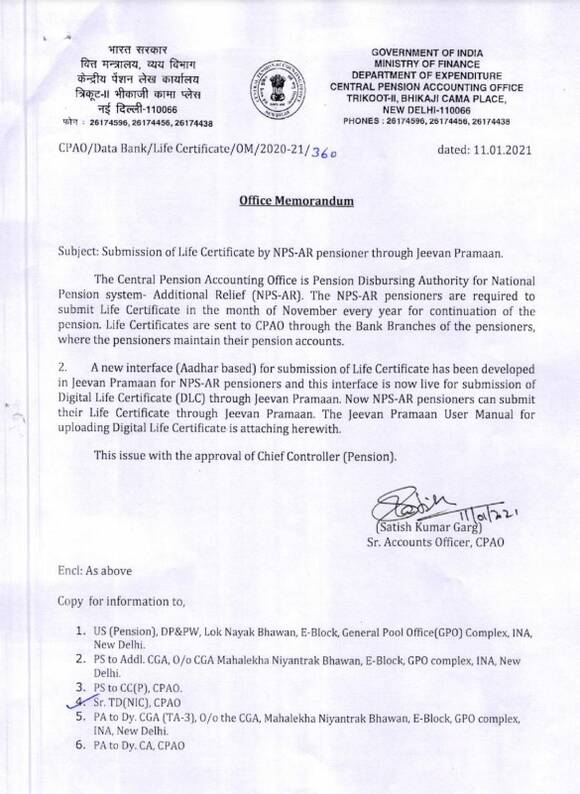
Flash News

DA Jan 2022 - Grant of Dearness Allowance to Central Government employees - Revised Rates effective from 01.01.2022

 3% DA Hike - Revised Rates effective from 01.01.2022: DoE OM dated 31.03.2022 No. 1/2/2022-E-II (B) Government of India Ministry of Finance...