Showing posts with label Leave Rules. Show all posts

Tuesday, 27 August 2019

LEAVE AND ATTENDANCE Amendment 2019 and Special Casual Leave for Officers

LEAVE AND ATTENDANCE Amendment 2019 and Special Casual Leave for Officers

Office of the CGDA, Ulan Batar Road, Palam,
Delhi Cantt-110010.
No. AN/III/3060/I/Vol. VIII
dated 23.07.2019
To
All PCsDA/ PCsA (Fys.)/ PIFAs,
CsDA/ CsFA (Fys.)/ IFAs/ RTCs.
(through CGDA website).

Subject: Amendment to OM Part-I (2014 edition): Circulation of CS No. 06/2019 & 07/2019.
Correction Slips no. 06/2019 & 07/2019 of the Office Manual Part-I (2014 edition) has been uploaded on website for information and updation of OM Part-I. The Correction Slip will not be forwarded separately.
Please download the Correction Slip and update the concerned Paras of the Office Manual Part-I (2014 edition).
sd/-
(Rajeev Ranjan Kumar)
Dy. CGDA (AN)
Amendment to OM Part-I (Edition 2014)
Correction Slip No. 06/2019.

CHAPTER V
LEAVE AND ATTENDANCE
Leave (i) Officers – Para-221
For
The grant of leave to the CGDA requires the sanction of the Ministry of Defence (Finance). For officers in the HAG + Scale, HAG and officers in the Senior Administrative Grade (other than those serving under Principal Controllers of Defence Accounts and equivalent-post), CGDA is the leave sanctioning authority. For SAG officers serving in the Factories organisation and Principal Corttroller of Defence Accounts Organisation, Principal Controller of Accounts(Factories) and Principal Controller of Defence Accounts are the leave sanctioning authorities.

Powers to grant leave to the IDAS Officers of the rank of Addl CDA/Joint CDA and below including Probationary officers, is vested in the Principal Controller / Controller of Defence Accounts except where substitutes are required.

Read
The grant of leave to the CGDA requires the sanction of the Ministry of Defence (Finance). For officers in the HAG + Scale, HAG and officers in the Senior Administrative Grade (other than. those serving under Principal Controllers of Defence Accounts and equivalent-post), CGDA is the leave sanctioning authority. PCsDA/ CsDA posted outside HOrs. office may avail casual leave upto four days for herself/ himself and intimation in this regard shall be furnished to HOrs office as soon as possible. For SAG officers serving in the Factories organisation and Principal Controller of Defence Accounts Organisation, Principal Controller of Accounts (Factories) and Principal Controller of Defence Accounts are the leave sanctioning authorities.

Powers to grant leave to the IDAS Officers of the rank of Addl CDA/Joint CDA and below including Probationary officers, is vested in the Principal Controller / Controller of Defence Accounts except where substitutes are required.

Authority: HQrs. office AN-I circular no, AN-I/1466/ Leave Delegation/ Misc Corrs dated 12.09.2018.

Amendment to OM Part-I (Edition 2014)
Correction Slip No. 07/2019

CHAPTER V
LEAVE AND ATTENDANCE
(vii) Special Casual Leave

Para 246 – Note 1 (16) (c)

For
Panchayat/ Corporation/ Municipalities or other local bodies,

Read
Panchayat/ Corporation/ Municipalities or other local bodies. Central Government offices shall not be closed. Employees who are bona-fide voters and desire to exercise their franchise should, however, be offered reasonable facility, subject to normal exigencies of service, either by way of coming late to office or by being allowed to leave office early or a short absence on that day”.

Source: GoI, DoP&T OM No. 12/14/99-JCA dated 10.10.2001.

Monday, 17 June 2019

Grant of Special Casual Leave to a Central Government Servant who donates blood


Grant of Special Casual Leave to a Central Government Servant who donates blood.

No.13020/1/2017-Estt(L)
Government of India
Ministry of Personnel, Public Grievances and Pensions
Department of Personnel and Training

Old JNU Campus, New Delhi 110 067
Dated: 28.12.2017
Office Memorandum

Subject: Grant of Special Casual Leave for the Purpose of Blood Donation – Reg.

The undersigned is directed to refer to the provisions of this Department’s O.M. dated 8.10.1956, which for grant of Special Casual Leave to a Government servant who donates blood on that day.
In this regard, it is noted that presently this rule applies only to whole blood donation and does not cover apheresis donation. It is felt that rule should cover apheresis donation as well since it will have the added advantage of getting blood components like platelets, plasma etc.

In view of the above, it has now been decided that Special Casual Leave may be granted for blood donation or for apheresis (blood components such as red cells, plasma, platelets etc.) donation at licensed Blood Banks on a working day (for that day only) up to a maximum of 4 times in a year on submission of valid proof of donation.
sd/-
(Sandeep Saxena)
Under Secretary to the Government of India)
Source: icar.org.in

Saturday, 16 February 2019

PATERNITY LEAVE FOR CHILD ADOPTION/CHILD ADOPTION LEAVE

How is a child defined for the purpose of grant of Paternity Leave

PATERNITY LEAVE FOR CHILD ADOPTION/CHILD ADOPTION LEAVE

How is a child defined for the purpose of grant of Paternity Leave for Child Adoption/Child Adoption Leave

As per notes below rules 43AA and 43B “Child” for the purpose will include a child taken as ward by the Government servant, under the Guardians and Wards Act, 1890 or the personal law applicable to that Government servant, provided such a ward lives with the Government servant and is treated as a member of the family and provided such Government servant has, through a special will, conferred upon that ward the same status as that of a natural born child’.

CHILD CARE LEAVE

1. Whether women employees of Public Sector undertakings/Bodies etc. are entitled to CCL?

Orders issued by DOPT are not automatically applicable to the employees of Central Public Sector Undertakings/ Autonomous Bodies, Banks, etc. It is for the PSUs/ Autonomous Bodies to decide the applicability of the rules/instructions issued for the central Government employees to their employees in consultation with their Administrative Ministries.

2. Whether Govt. servant can be permitted to leave station/go abroad while on CCL?

Child care leave is granted to a woman employee to take care of the needs of the minor children. If the child is studying abroad or the Government servant has to go abroad for taking care of the child she may do so subject to other conditions laid down for this purpose.

3. What is the intention behind the instruction that CCL is to be treated like EL and sanctioned as such?

The intention is that CCL should be availed with prior approval of leave sanctioning authority and that the combination of CCL with other leave, if any, should be as per the restriction on EL.’ The restriction of the limit of 180 days at a stretch as applicable in the case of EL will not apply in case of CCL. The other conditions like CCL may not be granted for less than 15 days or in more than 3 spells etc., will apply. {Rule 43-C)

4. Whether child care leave has been extended to female industrial employees?

Child Care leave has been extended to all civilian female industrial employees covered by the CCS(Leave) Rules, 1972 subject to the conditions provided in rule 43-C of the CCS(Leave) Rules, 1972, as amended from time to time.{OM No.12012/2/2009-Estt.(L) dated 01-08-2012)

Commuted Leave

1. Whether commuted leave is admissible based on medical certificates of Hospitals/Medical Practitioner approved by the employer of the spouse in cases where the concerned employee has been allowed to avail such facilities from the employer of the spouse?

Leave on medical grounds may be allowed on the basis of certificates issued by Hospitals/Medical Practitioners approved by the employer of the spouse in such cases.

Study Leave Interest on Leave Encashment

Study Leave Interest on Leave Encashment

What is the maximum amount of study leave which can be availed?
The maximum amount of study leave for other than CHS officers is restricted to twenty four months during the entire service period and ordinarily it can be allowed for upto twelve months at a time. {Rule 51(1)). For CHS officers the ceiling is for 36 months for acquiring PG qualifications. {Rule 51(2)}.

Whether study leave can be clubbed with other leave?
Yes. Study leave may be combined with other kinds of leave, but in no case shall be grant of this leave in combination with leave, other than extraordinary leave involve a total absence of more than twenty eight months generally and thirty-six months for the courses leading to PhD. degree from the regular duties of the Government servant. (Rule 54)

Whether study leave can be clubbed with other leave?
Yes. Study leave may be combined with other kinds of leave, but in no case shall be grant of this leave in combination with leave, other than extraordinary leave involve a total absence of more than twenty eight months generally and thirty-six months for the courses leading to PhD. degree from the regular duties of the Government servant. (Rule 54)

What is the validity period of bond to be executed by the Government servant while proceeding on study leave?
Government servant is required to execute a bond to serve the Government for a period of three years after expiry of study leave. For CHS officers the period is five years. (Rule 55).

Whether a Govt. servant who has been granted study leave may be allowed to resign to take up a post in other Ministries/ Department of the Central Govt. within the bond period?
As per rule 50(5) (iii), a Govt. servant has to submit a bond to serve the Govt. for a period of 3 years. As the Govt. servant would still be serving Government in a Department other than parent Department, he may be allowed to submit his resignation to take up another post within the Central Govt. if he had applied for the post through proper channel.

LEAVE ENCASHMENT ON SUSPENSION / DISMISSAL / REMOVAL

LEAVE ENCASHMENT ON SUSPENSION / DISMISSAL / REMOVAL

Whether leave encashment can be sanctioned to a Govt servant on his superannuation while under suspension?
Leave encashment may be allowed in such cases. However, Rule 39(3) of CCS (Leave) Rules, 1972 allows withholding of leave encashment in the case of a Govt. servant who retires from service on attaining the age of superannuation while under suspension or while disciplinary or criminal proceedings are pending against him, if in view of the authority there is a possibility of some money becoming recoverable from him on conclusion of the proceedings against him. On conclusion of the proceedings he/she will become eligible to the amount so withheld after adjustment of Government dues, if any.

Whether leave encashment can be sanctioned to a Govt.servant on his dismissal/removal, from service?
A government servant, who is dismissed / removed from service, ceases to have any claim to leave at his credit from the date of such dismissal, as per rule 9(1). Hence he is not entitled to any leave encashment.

INTEREST ON LEAVE ENCASHMENT

Whether interest is payable on delayed payment of leave encashment dues?
No. There is no provision in the CCS (Leave) Rules 1972 for payment of interest on leave encashment.

Encashment of EL on Joining Central Govt to PSUs

Encashment of EL on Joining Central Govt to PSUs

ENCASHMENT OF EARNED LEAVE ON JOINING CENTRAL GOVERNMENT FROM PSUS & VICE VERSA

Whether earned leave encashment allowed by the State Governments, PSUs, Autonomous Bodies to Govt. servant prior to his joining the Central Govt. is to be taken into account while calculating ceiling of leave encashment on his superannuation and retirement from Central Govt.?
Encashment of EL allowed by the State Governments, Public Sector Undertakings/Autonomous Bodies for services rendered therein need not be taken into account for calculating the ceiling of 300 days of Earned leave to be encashed as per CCS (Leave) Rules.

Whether Leave encashment allowed by Govt. under CCS(Leave) Rules, 1972 on absorption in a Central autonomous body/PSU is to be taken into account?
Encashment of EL allowed by the Govt. under the CCS (Leave) Rules, 1972 for service rendered in the Central Govt. prior to absorption in Central autonomous body shall not be taken into account while calculating the number of days of E.L. encashable in an autonomous body / PSU for the post absorption period.

Whether cash equivalent of leave salary in case of permanent absorption in PSU / Autonomous Body is permissible?
A Government servant who has been permitted to be absorbed in a Corporation/Company wholly or substantially owned or controlled by Central/State Government shall be suo-motu granted cash equivalent of leave salary of earned leave at his credit on the date of absorption subject to a maximum of 300 days (being calculated as per provisions of rule 39) {Rule 39-D)Permanent absorption under the rule shall mean such appointment for which the Government servant applied through proper channel and resigned from Government service for taking up of such appointment - {Note below rule 39-D - Notification No. 13026/3/2011-Estt.(L) dated 28-03-2012}

Whether encashment of leave is permitted after LTC is benefited for Central Govt Employees?

Whether encashment of leave is permitted after LTC is benefited for Central Govt Employees?

Leave Encashment with LTC

Whether encashment of leave is allowed after LTC is availed?
Sanction of leave encashment should, as a practice, be done in advance, at the time of sanctioning the LTC. However, ex-postfacto sanction of leave encashment on LTC may be considered by the sanctioning authority as an exception in deserving cases within the time limit prescribed for submission of claims for LTC.

Whether encashment of leave with LTC can be availed at the time when the LTC is availed by the Government servant only or can leave be encashed at the time when LTC is availed by family members?
Yes. A Govt. servant can be permitted to encash earned leave upto 10 days either at the time of availing LTC for himself or when his family avails it provided other conditions are satisfied.

Whether leave encashment should be revised on retrospective revision of pay/D.A?
In terms of 38-A of CCS(Leave) Rules, encashment of EL alongwith LTC is to be calculated on pay admissible on the date of availing LTC and DA admissible on that date. If pay or DA admissible has been revised with retrospective effect, going by the rule the Govt. servant would be entitled to encashment of Leave on the revised rates.

Whether encashment of Earned Leave and Half Pay Leave is admissible to industrial employees?
The industrial employees, other than those under the cadre control of the Ministry of Railways, are entitled to encash both Earned Leave and Half Pay Leave, subject to overall limit of 300. The cash equivalent of Half Pay Leave shall be equal to leave salary admissible for Half Pay Leave plus Dearness Allowance admissible on the leave salary without any reduction being made on account of pension and pension equivalent of other retirement benefits payable. But no commutation of Half Pay Leave shall be allowed to make up for the shortfall in Earned Leave and these orders are effective from 07-11-2006.{0M No. 12012/3/2009- Estt.(L) dated 28-12-2012}

Via: centralgovernmentnews.com

What is the most extreme time of leave granted to a CG Employee?

What is the most extreme time of leave granted to a CG Employee?

Frequently Asked Question

1. What is the maximum period of leave of any kind which can be allowed to a Government servant? What is the impact if such limit is exceeded?
No. Government servant shall be granted leave of any kind for a continuous period of 5 years {Rule 12(1))Normally, absence from duty, with or without leave, for a continuous period exceeding 5 years other than on foreign service, implies that such Government servant has deemed to have resigned from Government service. {Rule 12(2))

2. What are the leave entitlements of Govt. servants serving in a vacation Department?
The rule 28 of the CCS (Leave) Rules, 1972 which came into effect from 1.9.2008 regulates the grant of Earned Leave for persons serving in the Vacation Department.

The said rule provides for as follows:-

(1) (a) A Government servant(other than a military officer) serving in a Vacation Department shall not be entitled to any earned leave in respect of duty performed in any year in which he avails himself of the full vacation.

(b) In respect of any year in which a Government servant avails himself of a portion of the vacation, he shall be entitled to earned leave in such proportion of 30 days, as the number of days of vacation not taken bears to the full vacation:
Provided that no such leave shall be admissible to a Government servant not in permanent employ or quasi-permanent employ in respect of the first year of his service.

(c) If, in any year, the Government servant does not avail himself of any vacation, earned leave shall be admissible to him in respect of that year under rule 26.

For the purpose of this rule, the term 'year' shall be construed not as meaning a calendar year in which duty is performed but as meaning twelve months of actual duty in a Vacation Department.

A Government servant entitled to vacation shall be considered to have availed himself of a vacation or a portion of a vacation unless he has been required by general or special order of a higher authority to forgo such vacation or portion of a vacation:

Provided that if he has been prevented by such order from enjoying more than fifteen days of the vacation, he shall be considered to have availed himself of no portion of the vacation.
When a Government servant serving in a Vacation Department proceeds on leave before completing a full year of duty, the earned leave admissible to him shall be calculated not with reference to the vacations which fall during the period of actual duty rendered before proceeding on leave but with reference to the vacation that falls during the year commencing from the date on which he completed the previous year of duty.

As per Rule 29(1) the half pay leave account of every Government servant (other than a military officer shall be credited with half pay leave in advance, in two instalments of ten days each on the first day of January and July of every calendar year. This is subject to conditions laid down in OM No. 13013/2/2008-Estt.(L) dated 11-11-2008.

Via: Central Government News.Com

Friday, 21 December 2018

Notification on leave as per 7th CPC's recommendations - DoPT


Notification on leave as per 7th CPC's recommendations - DoPT
DoPT: Notification on leave as per 7th CPC's recommendations

MINISTRY OF PERSONNEL, PUBLIC GRIEVANCES AND PENSIONS
(Department of Personnel and Training)

NOTIFICATION

New Delhi, the 11th December, 2018

G.S.R. 1209(E).- In exercise of the powers conferred by the proviso to article 309 read with clause
(5) of article 148 of the Constitution and after consultation with the Comptroller and Auditor General of India in relation to persons serving in the Indian Audit and Accounts Department, the President hereby makes the following rules further to amend the Central Civil Services (Leave) Rules, 1972, namely:-

1. (1) These rules may be called the Central Civil Services (Leave) (Fourth Amendment) Rules, 2018.
(2) They shall come into force on the date of their publication in the Official Gazette.

2. In the Central Civil Services (Leave) Rules, 1972,
(A) in rule 28, in sub-rule (1) for clauses (a), (b) and (c), the following clauses shall be substituted, namely:-
"(a) The leave account of every Government servant (other than a military officer) who is serving in a Vacation Department shall be credited with earned leave, in advance' in two installments of five days each on the first day of January and July of every calendar year.
(b) In respect of any year in which a Government Servant avails a portion of the vacation, he shall be entitled to additional earned leave in such proportion of twenty days, as the number of days of vacation not taken bears to the full vacation, provided the total earned leave credited shall not exceed thirty days in a calendar year.
(c) If, in any year, the Government servant does not avail any vacation, earned leave will be as per Rule 26 instead of clauses (a) and (b).";
(B) in rule 29, for sub-rule (1), the following sub-rule shall be substituted, namely:-
"(1) The half pay leave account of every Government servant (other than a military officer and a Government servant serving in a Vacation Department) shall be credited with half pay leave in advance, in two installments of ten days each on the first day of January and July of every calendar year.";

(C) in rule 43-C. (a) for sub-rule (1), the following sub-rule shall be substituted, namely";
"(1) Subject to the provisions of this rule, a female Government servant and single male Government servant may be granted child care leave by an authority competent to grant leave for a maximum period of seven hundred and thirty days during entire service for taking care of two eldest surviving children, whether for rearing or for looking after any of their needs, such as education, sickness and the like." ;

(b) for sub-rules (3) and (4), the following sub-rules shall be substituted, namely:-
"(3) Grant of child care leave to a female Government servant and a single male Government servant under sub-rule (1) shall be subject to the following conditions, namely:-
(i) it shall not be granted for more than three spells in a calendar year;
(ii) in case of a single female Government servant, the grant of leave in three spells in a calendar year shall be extended to six spells in a calendar year.
(iii) it shall not ordinarily be granted during the probation period except in case of certain extreme situations where the leave sanctioning authority is satisfied about the need of child care leave to the probationer, provided that the period for which such leave is sanctioned is minimal.
(iv) child care leave may not be granted for a period less than five days at a time.
(4) During the period of child care leave, a female Government servant and a single male Government servant shall be paid one hundred percent of the salary for the first three hundred and sixty five days, and at eighty percent of the salary for the next three hundred and sixty five days.
Explanation.- Single Male Government Servant' means - an unmarried or widower or divorcee Government servant.";
(D) for rule 44, the following rule shall be substituted, namely:-


"44. Work Related Illness and Injury Leave:-
The authority competent to grant leave may grant Work Related Illness and Injury Leave ( herein after referred to as WRIIL) to a Government servant (whether permanent or temporary), who suffers illness or injury that is attributable to or aggravated in the performance of her or his official duties or in consequence of her or his official position subject to the provisions contained in sub-rule (1) of rule 19 of these rules, on the following conditions, namely :
(1) Full pay and allowances shall be granted to all employees during the entire period of hospitalisation on account of WRIIL.
(2) Beyond hospitalization, WRIIL shall be governed as follows:

(a) A Government servant (other than a military officer) full pay and allowances for the six months immediately following hospitalisation and Half Pay for twelve months beyond the said period of six months. The Half Pay period may be commuted to full pay with corresponding number of days of Half Pay Leave debited from the employees leave account.
(b) For officers of Central Armed Police Forces full pay and allowances for six months immediately following the hospitalisation and full pay only for the next twenty four months.
(c) For personnel below the rank of officer of the Central Armed Police Forces full pay and allowances, with no limit regarding period.

(3) In the case of persons to whom the Workmen's Compensation Act, 1923 applies, the amount of leave salary payable under WRIIL shall be reduced by the amount of compensation paid under the Act.

(4) No Earned Leave or Half Pay Leave shall be credited during the period that employee is on WRIIL.".
(E) rules 45 and 46 shall be omitted.
[F. No. 11020/01/2017 -Estt(L)]
GYANENDRA DEV TRIPATHI Jt. Secy.

Note : The principal rules were published in the Gazette of India, Extraordinary, Part-II, Section 3,
Sub-section (i), dated 8th April, 1972 vide number S.O. 940 dated the 15th March, 1972 and have been subsequently amended vide:

Source: DoPT

Tuesday, 2 January 2018

Grant of Special Casual Leave for the purpose of blood donation

Grant of Special Casual Leave for the purpose of blood donation

Special-Casual-Leave-blood-donation

No.13020/1/2017-Estt(L)
Government of India
Ministry of Personnel, Public Grievances and Pensions
Department of Personnel & Training
Old JNU Campus, New Delhi 110 067
Dated: 29.12.2017
Office Memorandum

Subject: Grant of Special Casual Leave for the purpose of blood donation - reg.

The undersigned is directed to refer to the provisions of this Department's O.M. dated 8.10.1956, which provides for grant of Special Casual Leave to a Government servant who donates blood on that day.

2. In this regard, it is noted that presently this rule applies only to whole blood donation and does not cover apheresis donation. It is felt that the rule should cover apheresis donation as well since it will have the added advantage of getting blood components like platelets, plasma etc.

3. In view of the above, it has now been decided that Special Casual Leave may be granted for blood donation or for apheresis (blood components such as cells, plasma, platelets etc.,)donation at licensed Blood Banks on a working day (for that day only) up to a maximum of 4 times in a year on submission of valid proof of donation.

sd/-
(Sandeep Saxena)
Under Secretary to the Government of India
Source: dopt.gov.in

Thursday, 31 August 2017

Guidelines on leave and voluntary retirement of Railway Employees - Persons with Disabilities

Guidelines on leave and voluntary retirement of Railway Employees - Persons with Disabilities
GOVERNMENT OF INDIA
MINISTRY OF RAILWAYS
RAILWAY BOARD
RBE No.107/2017
No.E(P&A)l-2017/CPC/LE-5
New Delhi, dated 30.08.2017
The General Managers and Principal Financial Advisers,
All Indian Railways & Production Units.

Sub: Guidelines on leave and voluntary retirement of Railway servants in light of the provisions of the Section 47 of Persons with Disabilities (Equal Opportunities, Protection of Rights and Full Participation) Act, 1995.

In pursuance of Department of Personnel & Training's OM No.18017/1/2014-Estt(L) dated 25.02.2015 and OM No. 25012/1/2015-Estt(A-IV) dated 19.05.2015, the issues relating to leave and notice of voluntary retirement of Railway servants who have acquired a disability while in service are required to be dealt with in the light of the provisions of the Section 47 of Persons with Disabilities (Equal Opportunities, Protection of Rights and Full Participation) Act, 1995.

2. Leave applied on medical certificate in connection with disability should not be refused or revoked without reference to a Medical Authority, whose advice shall be binding. The ceiling on maximum permissible leave laid down in Rule 510 of IREC Vol-1 may not be applied to leave on medical certificate applied in connection with the disability. Any leave debited for the period after a Railway servant is declared incapacitated shall be remitted back into his/her leave account. For a Railway servant who is unable to submit an application or medical certificate on account of disability, an application/medical certificate submitted by a family member may be accepted.

3. Further, keeping in view the provisions of the Section 47 of PWD Act, 1995 and the judgment of the Hon'ble Supreme Court in Bhagwan Dass & Anr Vs Punjab State Electricity Board (2008) 1 5CC 579, it has been decided that whenever a Railway servant seeks voluntary retirement citing medical grounds, or when the said notice has been submitted due to a disability, the administrative authorities shall examine as to whether the case is covered under Section 47 of PWD Act, 1995. In case the provisions are applicable, the Railway servant shall be advised that he/she has the option of continuing in service with the same pay scale and service benefits.

3.1 In case a disabled Railway servant reconsiders his decision and withdraws the notice for voluntary retirement, his case shall be dealt with under the provisions of the Section 47 of PWD Act, 1995. If however, in spite of being so advised, such Government servant still wishes to take voluntary retirement, the request may be processed as per applicable rule.

4. It is requested to keep the above in view while processing cases of requests for voluntary retirement and leave from disabled Railway servants under the provisions of the Section 47 of PWD Act, 1995.

5. This issues with the concurrence of the Finance Directorate of the Ministry of Railway.

6. Please Acknowledge receipt.
(Anil Kumar)
Dy.Director/E(P&A)-I
Railway Board.

Wednesday, 5 July 2017

DoPT Clarification in respect of encashment of Earned Leave to reemployed pensioners


Clarification in respect of encashment of Earned Leave to reemployed pensioners - DoPT

No.14028/1/2017-Estt(L)
Government of India
Ministry of Personnel, Public Grievances and Pensions
Department of Personnel & Training
Old JNU Campus, New Delhi 110 067
Dated: 27.06.2017
OFFICE MEMORANDUM

Subject:- Clarification in respect of encashment of Earned Leave to reemployed pensioners- Reg.

This Department has been receiving several references requesting for clarification relating to CCS (Leave) Rules, 1972 regarding eligibility for leave encashment to Government servants who are re- employed after retirement.

2. In this regard, it is clarified that persons re-employed after retirement may be governed by rule 39(6) (a)(iii) of the said Rules and they may be granted leave encashment up to a maximum of 300 days including the period for which encashment was allowed at the time of retirement. The cases already decided otherwise in consultation with this Department need not be reopened.

3. This issues with the approval of JS(E).
sd/-
(Navneet Misra)
Under Secretary to the Government of India
Click to view the order
Authority: www.dopt.gov.in

Sunday, 15 January 2017

Types of Leave applicable to Central Government Employees as per Leave Rules

Types of Leave applicable to Central Government Employees as per Leave Rules

Central-Government-Employees-Leave -Rules


A brief on all Types of Leave applicable to Central Government Employees as per Leave Rules - Earned Leave, Half Pay Leave, Commuted Leave, Leave Not Due, Maternity Leave, Paternity Leave, Study Leave, Extraordinary Leave, Chile Care Leave and More

1. Earned Leave: Earned Leave is 'earned' by duty. The credit for earn leave will awarded at a rate of 15 days on the 1st of January and 1st of July every year. It can be accumulated up to 300 days in addition to the number of days for which encashment has been allowed along with LTC. Maximum of 180 days at a time can be availed in the case of Earned Leave.

2. Half Pay Leave: All Government servants are entitled to 20 days of HPL for every completed year of service. Half pay leave is calculated at 20 days for each completed year of service. For eg, if you are in service for 2 years , you will be having a total of 40 days of half pay leave. The service includes periods of duty and leave including extraordinary leave with or without MC. Half pay leave can be availed with or without MC(Medical Certificate). From 1st January 1986, half pay leave is credited in advance at the rate of 10 days on the 1st of January and 1st of July every year.

3.Commuted Leave: This Leave is granted on medical certificate normally. Commuted leave not exceeding half the amount of half-pay leave due can be taken on medical certificate. Up to a maximum of 90 days can be taken during the entire service without medical certificate where such leave is utilized for an approved course of study certified to be in university interest.
It can be taken up to a maximum of 60 days can be granted to a female employee in continuation of maternity leave without medical certificate and upto a maximum of 60 days can be granted without medical certificate to a female employee with less than two living children, on adoption of a child less than one year old. Commuted leave may be granted at the request of the employee even when earned leave is due to him.

4. Leave Not Due: This Leave is also granted on medical certificate normally. Leave not due is granted when there is no half-pay leave at credit and the employee requests for the grant of Leave Not Due. It is granted only medical certificate if the leave sanctioning authority is satisfied that there is a reasonable prospect of the employee returning to duty on its expiry. It may be granted without medical certificate in continuation of maternity leave, and may be granted without medical certificate to a female employee with less than two living children, on adoption of a child less than one year old. The amount of leave should be limited to the half-pay leave that the employee is likely to earn subsequently. Leave not due during the entire service is limited to a maximum of 360 days and due will be debited against the half-pay leave that the employee may earn subsequently.

5. Maternity Leave : Maternity leave is granted to women government employees.
1) Pregnancy: 180 days - Admissible only to employees with less than two surviving children.
2) Miscarriage/abortion (induced or otherwise): Total of 45 days in the entire service. However, any such leave taken prior to 16.6.1994 will not be taken into account for this limitation. Admissible irrespective of number of surviving children. Application to be supported by a certificate from a registered medical practitioner for NGOs and from AMA for GOs.
The maternity leave is not debited to leave account and full pay is granted. It cannot be combined with any other leaves and counts as service for increments and pension.

6. Paternity Leave : A male employee with less than two surviving children may be granted Paternity Leave for a period of 15 days during the confinement of his wife. During the period of such leave he shall be paid leave salary equal to the pay drawn immediately before proceeding on leave. Paternity Leave shall not be debited against the leave account and may be combined with other kind of leave as in the case of Maternity Leave.

7. Study Leave: Study leave may be granted to all government employees with not less than five years' service for undergoing a special course consisting of higher studies or specialized training in a professional or technical subject having a direct and close connection with the sphere of his duties as a civil servant.
The course for which the study leave is taken should be certified to be of definite advantage to govt from the point of view of public interest and that particular study should be approved by the authority competent to grant leave.
The official should submit a full report on the work done during study leave. Maximum of 24 months of leave is sanctioned. In the case of CHS officers 36 months of leave can be granted at a stretch or in different spells.
Study leave will not be debited to the leave account and may be combined with other leave due. Study leave is not granted for studies outside India if facilities are available in India and to an official due to retire within 3 years of return from the study leave.

8. Extra Ordinary Leave : Extraordinary leave is granted to a Government servant when no other leave is admissible or when other leave is admissible, but the Government servant applies in writing for extraordinary leave.
Extraordinary leave cannot be availed concurrently during the notice period, when going on voluntary retirement and EOL may also be granted to regularize periods of absence without leave retrospectively.

9. Casual Leave : In a calendar year eight days of casual leave is permissible.
Casual leave is not a recognized form of leave and is not subject to any rules made by the Government of India. An official on Casual Leave is not treated as absent from duty and pay is not intermitted.
(i) Casual Leave can be combined with Special Casual Leave/vacation but not with any other kind of leave.
(ii) It cannot be combined with joining time.
(iii) Sundays and Holidays falling during a period of Casual Leave are not counted as part of Casual Leave.
(iv) Sundays/public holidays/restricted holidays/weekly offs can be prefixed/suffixed to Casual Leave.
(v) Casual Leave can be taken while on tour, but no daily allowance will be admissible for the period.
(vi) Casual Leave can be taken for half day also.
(vii) Essentially intended for short periods. It should not normally be granted for more than 5 days at any one time, except under special circumstances.
(viii) LTC can be availed du ring Casual Leave.
(ix) Individuals appointed and joining duty during the middle of a year may avail of Casual Leave proportionately or to the full extent at the discretion of the Competent Authority.
10. Child Care Leave : Woman employees having minor children may be granted Child Care Leave by an authority competent to grant leave for a maximum period of 730 days (2 years) during their entire service for taking care of up to two children., whether for rearing or to look after any of their needs like examination, sickness, etc..
Conditions for Child Care Leave
1. Child care leave shall not be admissible if the child is eighteen years of age or older equal to the pay drawn immediately before proceeding on leave.
2. It can be availed in more than one spell.
3. It can not be debited against the leave account.
4. It may be combined with leave of the kind due and admissible.
11. Hospital Leave: Hospital leave is admissible to Group 'C' employees whose duties involve handling of dangerous machinery, explosive materials, poisonous drugs and performance of hazardous takes and to Group 'D' Employees.
Medical certificate from an authorized medical attendant is necessary for grant of this leave. This hospital leave may be combined with any other kind of leave due and admissible, provided total period of leave does not exceed 28 months.

12. Vacation Department Staff leave Entitlement : The leave entitlements of employees of Vacation Departments (i.e. departments where regular vacations are allowed during which those serving in them are permitted to be absent from duty) are the same as those serving in non-vacation Departments except in respect of 'earned leave'.
No earned leave will be admissible to a government servant of a vacation Department in any year in which he avails of the full vacation. The vacation can be combined with casual leave.

13. Special Disability Leave : Special disability leave admissible to all employees when disabled by injury intentionally or accidentally inflicted or caused in or in consequence of the due performance of official duties or in consequences of official position. The disability above should have manifested within three months of the occurrence to which it is attributed and the person disabled had acted with due promptitude in bringing it to notice. The leave sanctioning authority, if satisfied as to the cause of the disability, may relax the condition and grant leave in cases where disability has manifested more than three months after the occurrence of its cause.
Special disability leave is also admissible when disabled by illness incurred in the performance of any particular duty, which has the effect of increasing liability to illness or injury beyond the ordinary risk attaching to the civil post held, under the same condition.This disability should be certified by an Authorised Medical Attendant to be directly due to the performance of the particular duty.
Maximum of 24 months of leave may be granted.
May be combined with any other leave.
Will count as service for pension.
Will not be debited to the leave account.
14. Child Adoption Leave: Child adoption leave is granted to Female employees, with fewer than two surviving children on valid adoption of a child below the age of one year, for a period of 135 days immediately after the date of valid adoption.
Leave salary will be equal to the pay drawn immediately before proceeding on leave.
It may be combined with leave of any other kind. Leave not debited against the leave account.

15. Leave to Probationers : A person appointed to a post on probation is entitled to all kinds of leave admissible under the rules to a permanent servants according as his appointment is against a permanent post.

16. Leave to Apprentices : Apprentices are admissible to leave on medical certificate, on leave salary equivalent to half pay for a period not exceeding one month in any year of apprenticeship

Tuesday, 8 November 2016

Tamil Nadu Fundamental Rules - Rule 101(a) - Maternity Leave - Enhancement of maternity leave from 6 months (180 days) to 9 months (270 days) - Orders issued

ABSTRACT

Tamil Nadu Fundamental Rules - Rule 101(a) - Maternity Leave - Enhancement of maternity leave from 6 months (180 days) to 9 months (270 days) - Orders issued

PERSONNEL AND ADMINISTRATIVE REFORMS (FR.III) DEPARTMENT

G.O.(Ms.) No.105
Dated: 07.11.2016
Read:
1. G.O.(Ms.) No.51, Personnel and Administrative Reforms (FR-III) Department, dated 16.05.2011.
2. G.O.(Ms.) No.61, Personnel and Administrative Reforms (FR-III) Department, dated 16.06.2011.
3. G.O.(Ms.) No.138, Personnel and Administrative Reforms (FR-IV) Department, dated 19.11.2013.


ORDER:
In the Government orders first and second read above, orders were issued enhancing the maternity leave from 90 days to 180 days to married women Government servants, with less than two surviving children, which may be spread over from the pre-confinement rest to post-confinement recuperation, with full pay, at the option of the women Government Servant. Accordingly, in the Government Order third read above, Rule 101(a) of the Fundamental Rules was also amended.


2. The Government, after careful consideration, based on the announcement made in the Tamil Nadu Legislative Assembly by the Hon'ble Chief Minister on 01.09.2016, under rule 110 of the Legislative Assembly Rules order that the maternity leave admissible to married women Government Servants with less than two surviving children, which is 6 months (180 days) at present, be enhanced to 9 months (270 days), with full pay, which may be spread over from the pre-confinement rest to post-confinement recuperation, with full pay, at the option of the women Government Servant. The women Government Servants who proceeded on maternity leave, prior to the date of issue of this order and continue to be on that leave as of now, are also eligible for availing maternity leave upto 9 months (270 days), in total.

3. Necessary amendments to the Fundamental Rules will be issued separately.

(BY ORDER OF THE GOVERNOR)

S.SWARNA
SECRETARY TO GOVERNMENT
Authority: www.tn.gov.in

Friday, 11 March 2016

Women employees demand two year leave for raising newborns

Women employees demand two year leave for raising newborns

Like the central government, the female employees of the Tamil Nadu state government have requested the government to give them two years maternity leave to raise their newborns. The proposal was made during the International Women’s Day celebrations.

The International Women’s Day is celebrated all over the world to ensure the safety of women. Women must be treated as equals of men at workplace and in the society. Also, selective abortions of female foetuses, and killing of female babies must be stopped.

Women take care of the health of their entire family, but often neglect their own health. Due to lack of proper nutrition, many women suffer from malnutrition and anaemia. Women can be healthy only if they eat well-balanced food. Only then will they be able to give birth to healthy children.

The Tamil Nadu government must, like the Central Government, give two years maternity leave to its female employees so they can raise their newborns.

Friday, 29 January 2016

7th CPC Recommendations on Encashment and Accumulation of Earned Leave

7th CPC Recommendations on Encashment and Accumulation of Earned Leave

“The recommendations in relation to pay of both the civilian and defence forces personnel will also lead to a significant increase in the pay drawn and therefore in the total amount of leave encashment available for an employee. Therefore raising the present ceiling of 300 days is not recommended by the Commission”.

Earned Leave : Presently 30 days EL per annum is granted to Civilian employees and 60 days to Defence personnel.

EL can be accumulated up to 300 days in addition to the number of days for which encashment has been allowed along with LTC.

Suggestions have been made to increase the accumulation to 450 days, allow encashment of 50 percent of the accumulated EL after 20 years of service and delink encashment of leave from LTC. A novel concept of “gifting” has been put forward, wherein employee should be allowed to ‘gift’ certain number of days of leave to one’s spouse or one’s colleague. “Vacational” staff like teachers, principals, etc. have demanded restoration of 10 days EL, which was changed to 20 days Half Pay Leave by VI CPC.

Leave Encashment permitted at the time of retirement:

CPC Earned Leave
IV CPC  240 days
V CPC 300 days
VI CPC 300 days
# # excludes 60 days EL encashment during LTC

Half Pay Leave (HPL) : Presently, government employees are entitled to 20 days of Half Pay Leave for each completed year of service, credited @10 days on the 1st of January and 1st of July every year. There are representations that encashment of HPL should be allowed at the time of superannuation.

Analysis and Recommendations : The demands lack merit. Elsewhere in the report it has been recommended that 20 days HPL granted to “Vacational” staff be converted into 10 days EL. Hence, HPL will henceforth not be available to them. No change other than this is recommended

Analysis and Recommendations : In many organizations, employees are encouraged to take leave on the premise that it revitalizes them and is beneficial for the organization in the long run. Such a system is not prevalent in the government sector in India, but substituting leave with cash is also not desirable. Hence, no change in encashment guidelines is recommended.

The Commission recognizes that Earned Leave is, as the name suggests, earned by an employee through the services rendered. Hence, it is personal to the employee and the concept of “gifting” cannot be considered.
The demand of “Vacational” staff can, however, be agreed to. Hence, it is recommended that “Vacational” staff be granted 10 days EL in place of 20 days Half Pay Leave. Other than this no other change is recommended.

Tuesday, 29 December 2015

Government to Increase Maternity Leave from 12 to 26 weeks

Government to Increase Maternity Leave from 12 to 26 weeks 

maternity-leave-cg-women-employees
The Ministry of Labour is expected to amend the Maternity Benefit Act, 1961, which presently entitles women to 12 weeks of maternity benefit whereby employers are liable to pay full wages for the period of leave.


Government to Increase Maternity Leave from 12 to 26 weeks – The International Labour Organisation recommends a minimum standard maternity leave of 14 weeks or more.

The union government is set to increase the maternity leave for women employed in private firms from the existing 12 weeks to 26 weeks.

Women and Child Development Minister Maneka Gandhi Monday said the Ministry of Labour has agreed to increase maternity leave to six-and-a-half months. “We had written to the Labour Ministry asking that the maternity leave be extended taking into account the six months of breastfeeding that is required post childbirth. The Labour Ministry has agreed to increase it to six-and-a-half months,” said Maneka.

The Ministry of Labour is expected to amend the Maternity Benefit Act, 1961, which presently entitles women to 12 weeks of maternity benefit whereby employers are liable to pay full wages for the period of leave.

Officials of the WCD Ministry said they will push for extending the leave to eight months, or 32 weeks, for women employed in both private and government sectors.

But WCD officials said the Labour Ministry has expressed reservations about increasing the maternity leave any further as they perceive that doing so will adversely affect the employability of women.

“The Labour Ministry has decided on six-and-a-half months following meetings with various stakeholders. We, however, feel that eight months of maternity leave — for women in government as well as private sectors — is required. We will move a note to the Cabinet Secretariat in this regard. Six months of exclusive breastfeeding is very important to combat malnutrition, diarrhoea and other diseases in infants and to lower infant mortality rate,” said a WCD official.

The International Labour Organisation recommends a minimum standard maternity leave of 14 weeks or more, though it encourages member states to increase it to at least 18 weeks. At 26 weeks, India is set to join the league of 42 countries where maternity leave exceeds 18 weeks. It, however, falls behind several East European, Central Asian and Scandinavian countries, which have the most generous national legislation for paid maternity leave.

Women employed in government jobs in India get a six-month maternity leave as per the Central Civil Service (Leave) Rules 1972. The last circular in this regard was issued in 2008, when it was increased from four-and-a-half months. If the WCD Ministry’s recommendations to the Cabinet Secretariat are accepted, the Department of Personal & Training will have to issue orders to enhance it to eight months.

Moreover, women government employees are allowed to take childcare leave of up to two years in phases at any point till their child turns 18 years old. The Seventh Pay Commission recently recommended that only the first 365 days of leave should be granted with full pay, while the remaining 365 can be availed at 80 per cent of the salary. But Maneka recently petitioned Finance Minister Arun Jaitley against the proposal, terming it a regressive step at a time when women are trying to become more economically independent.

“Women in India need longer maternity leave in absence of any support in parenting from men. It should not be seen as a deduction in labour hours but as a long-term investment from the future economic point of view. This is in addition to the fact that women need long maternity leave to recuperate and invest in child care,” said Ranjana Kumari, director of the Centre for Social Research.

She added that a recent analysis of the Maternity Benefit Act by CSR for the National Commission of Women showed that discrimination against pregnant women was widely prevalent in the corporate sector in the country.

Source: gconnect.in

Flash News

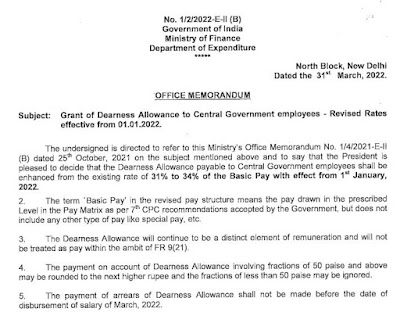
DA Jan 2022 - Grant of Dearness Allowance to Central Government employees - Revised Rates effective from 01.01.2022

 3% DA Hike - Revised Rates effective from 01.01.2022: DoE OM dated 31.03.2022 No. 1/2/2022-E-II (B) Government of India Ministry of Finance...